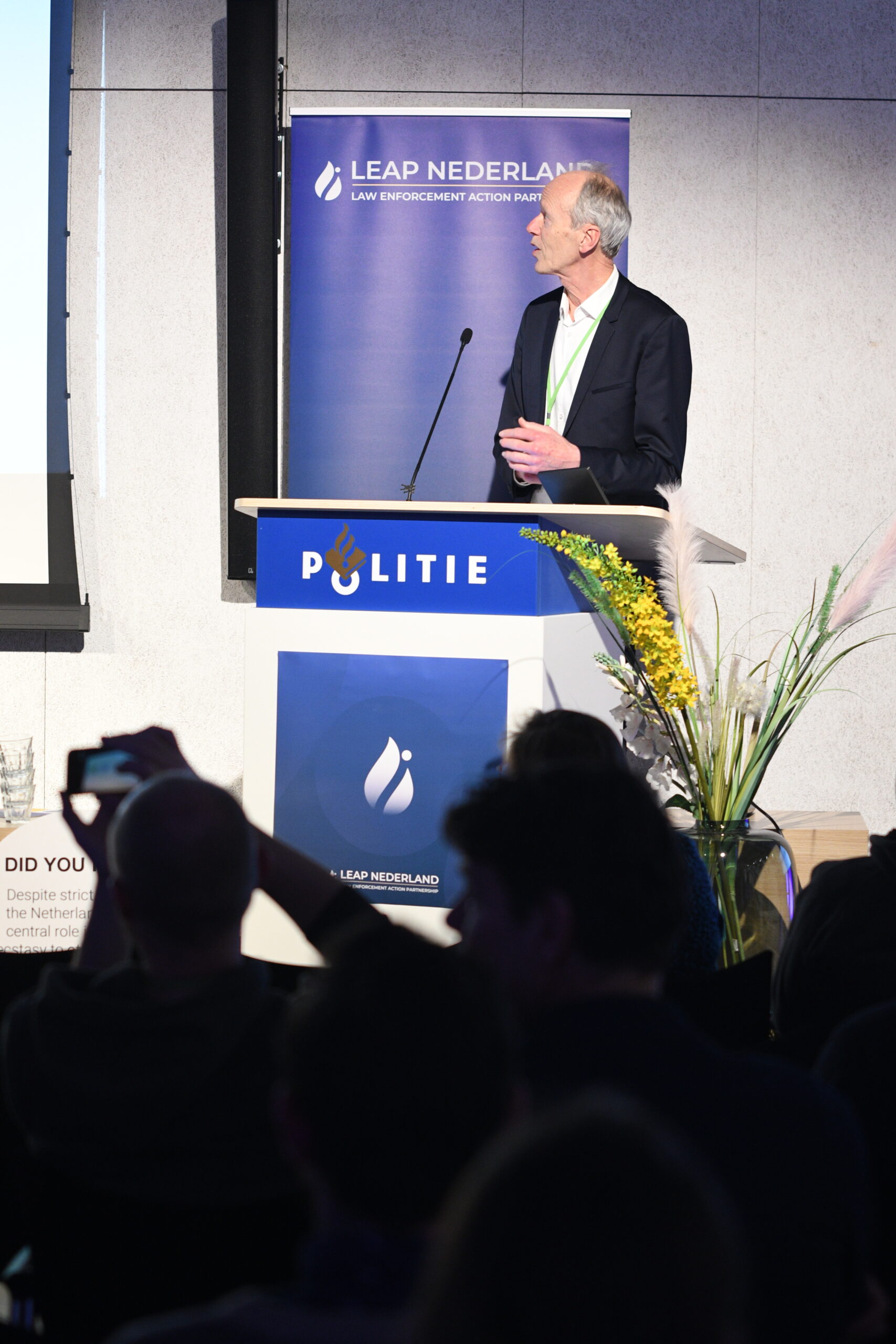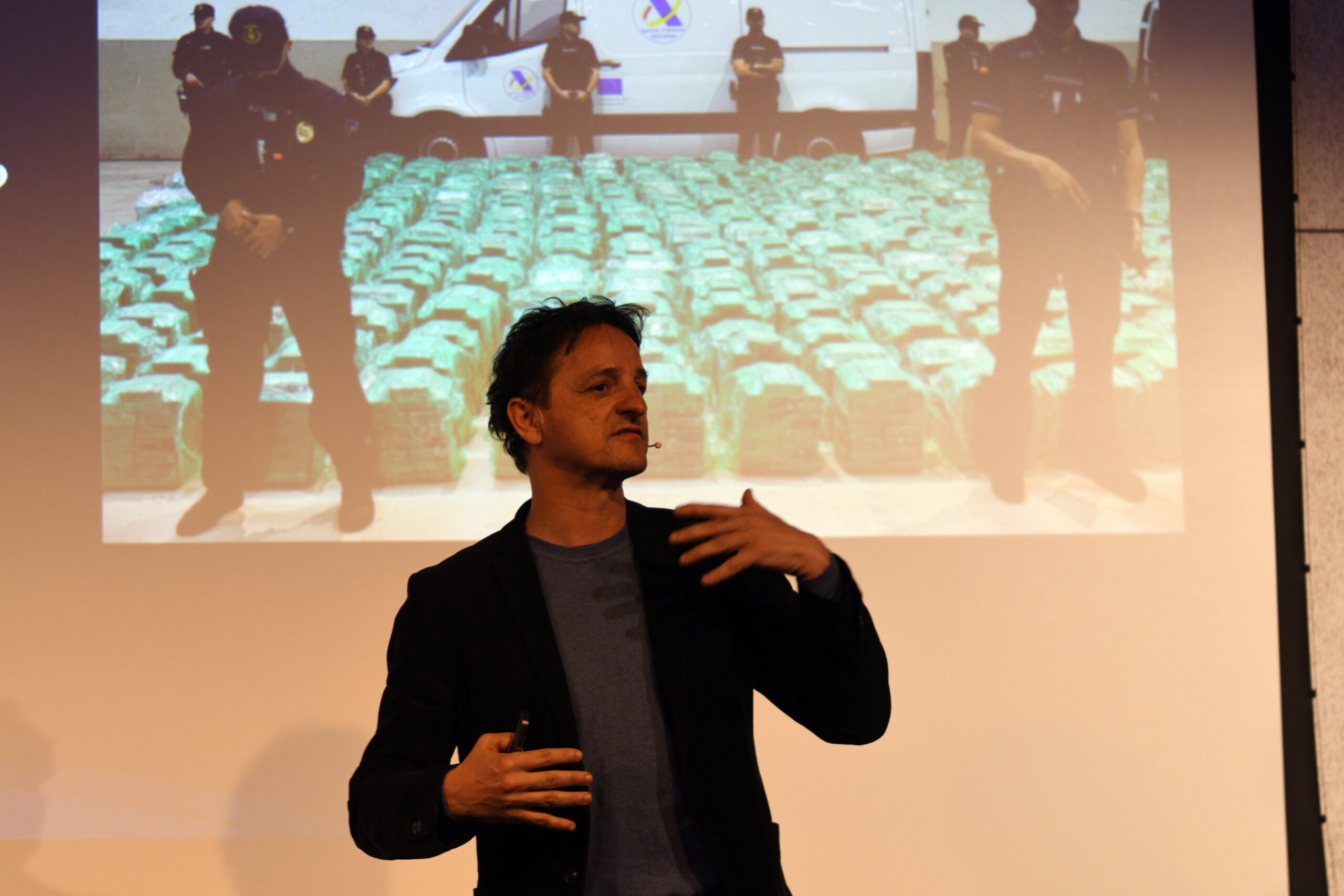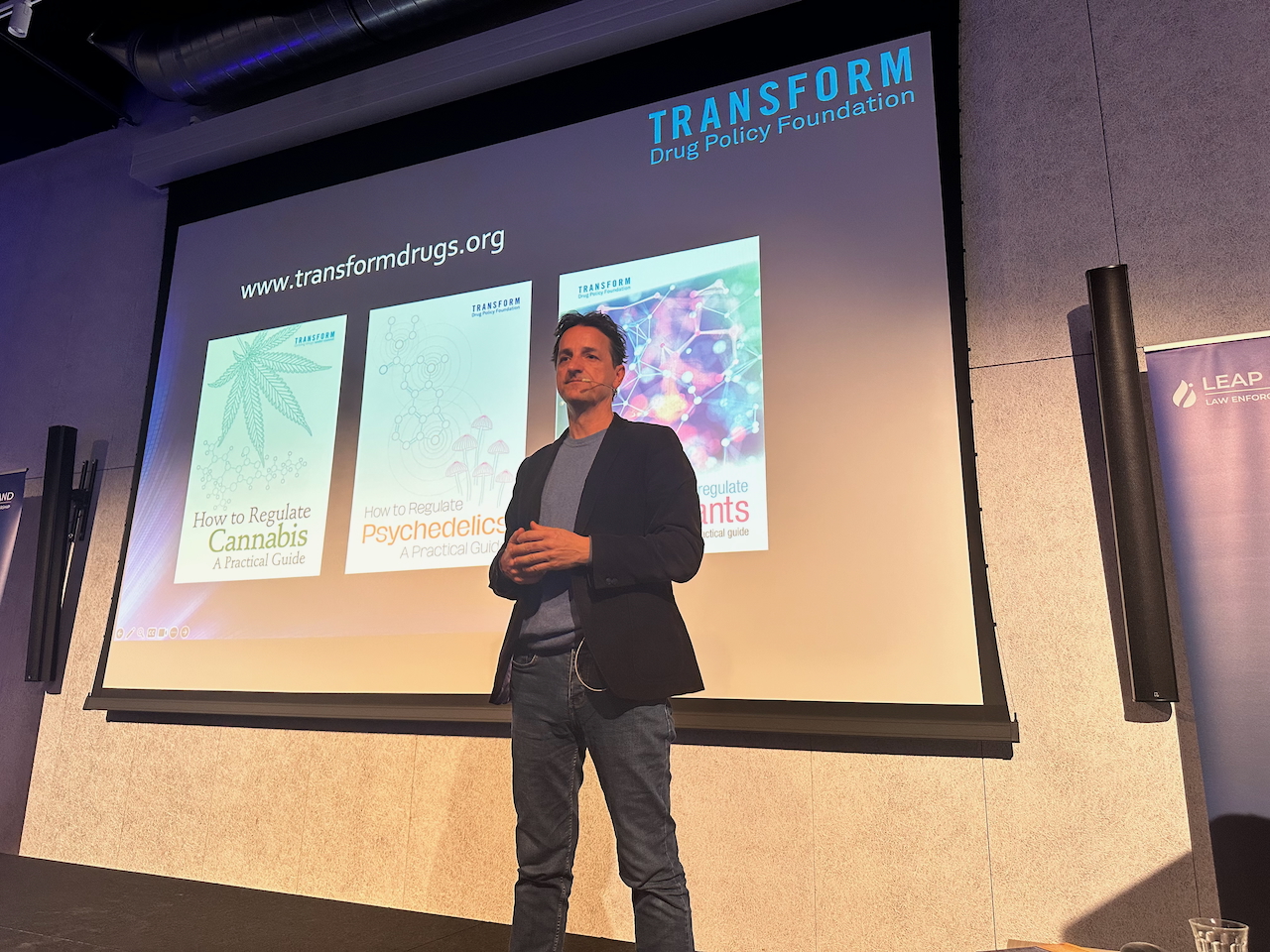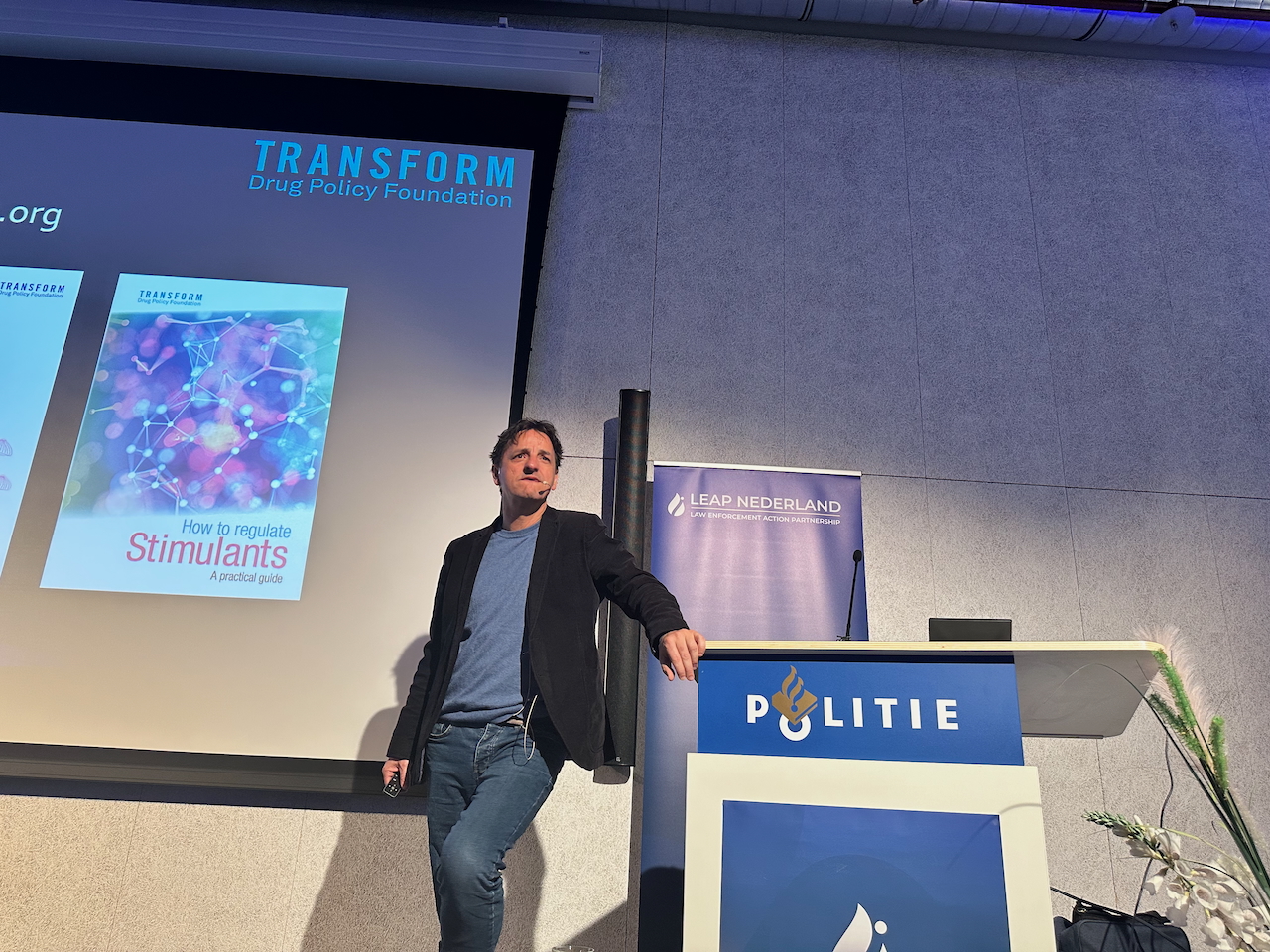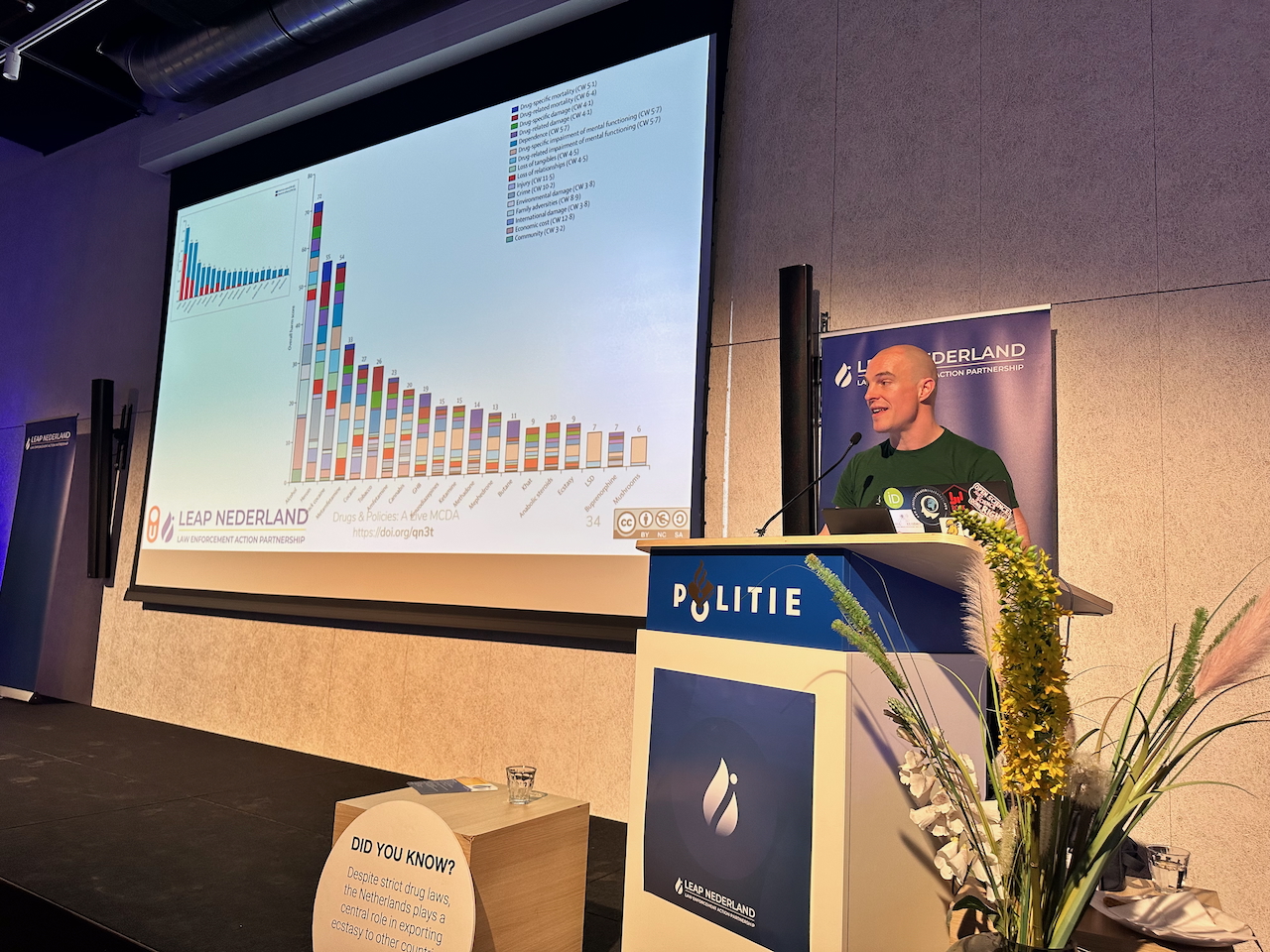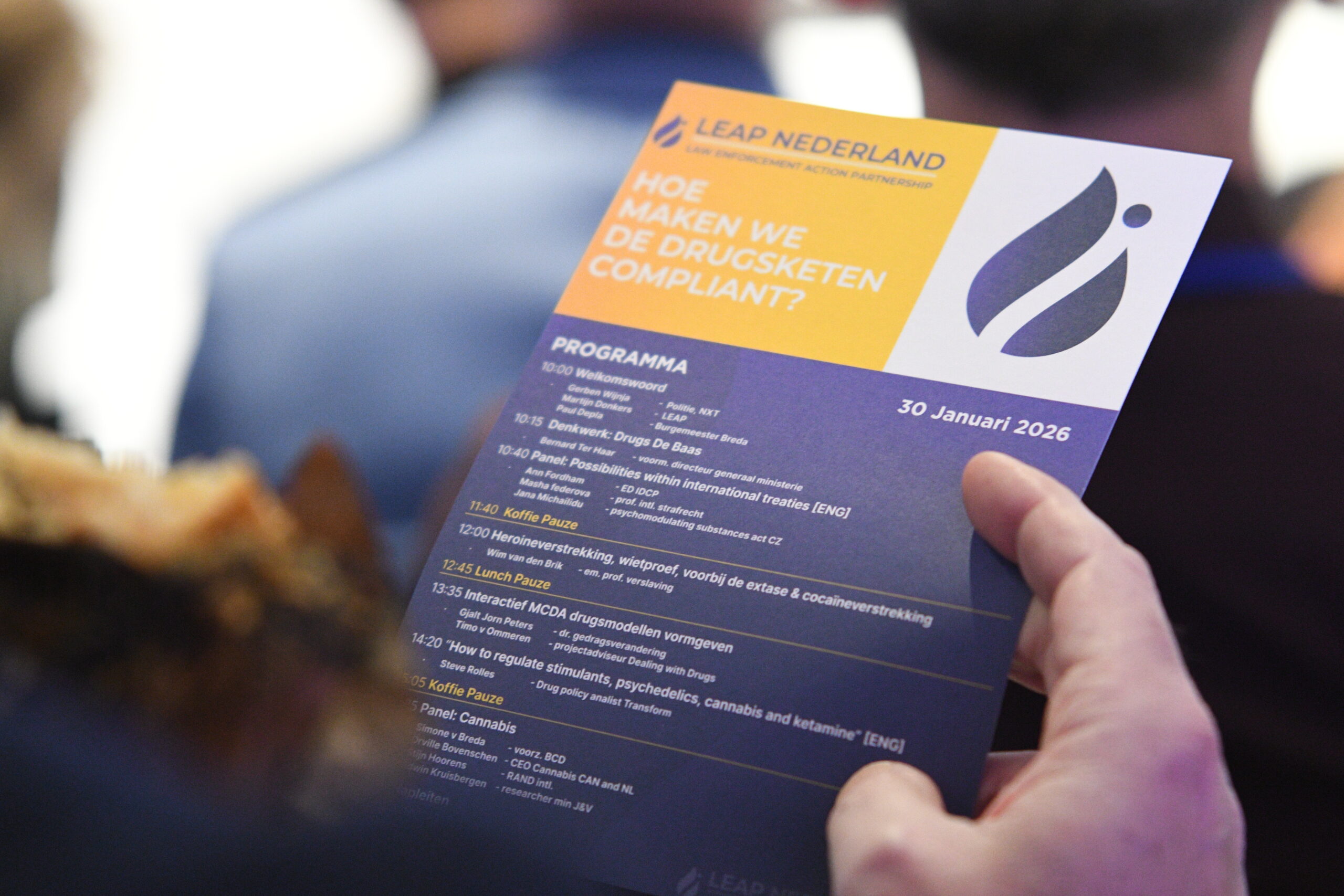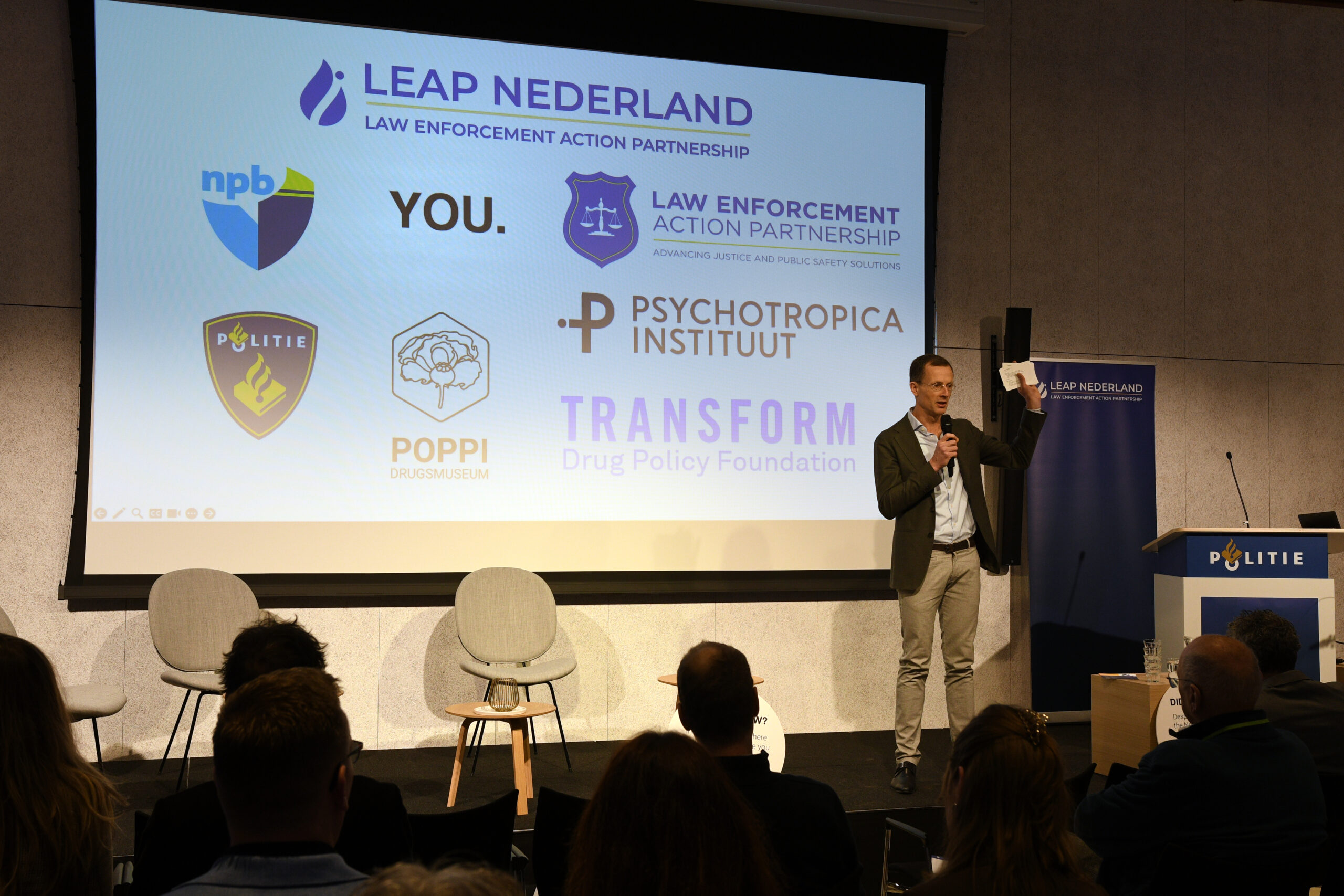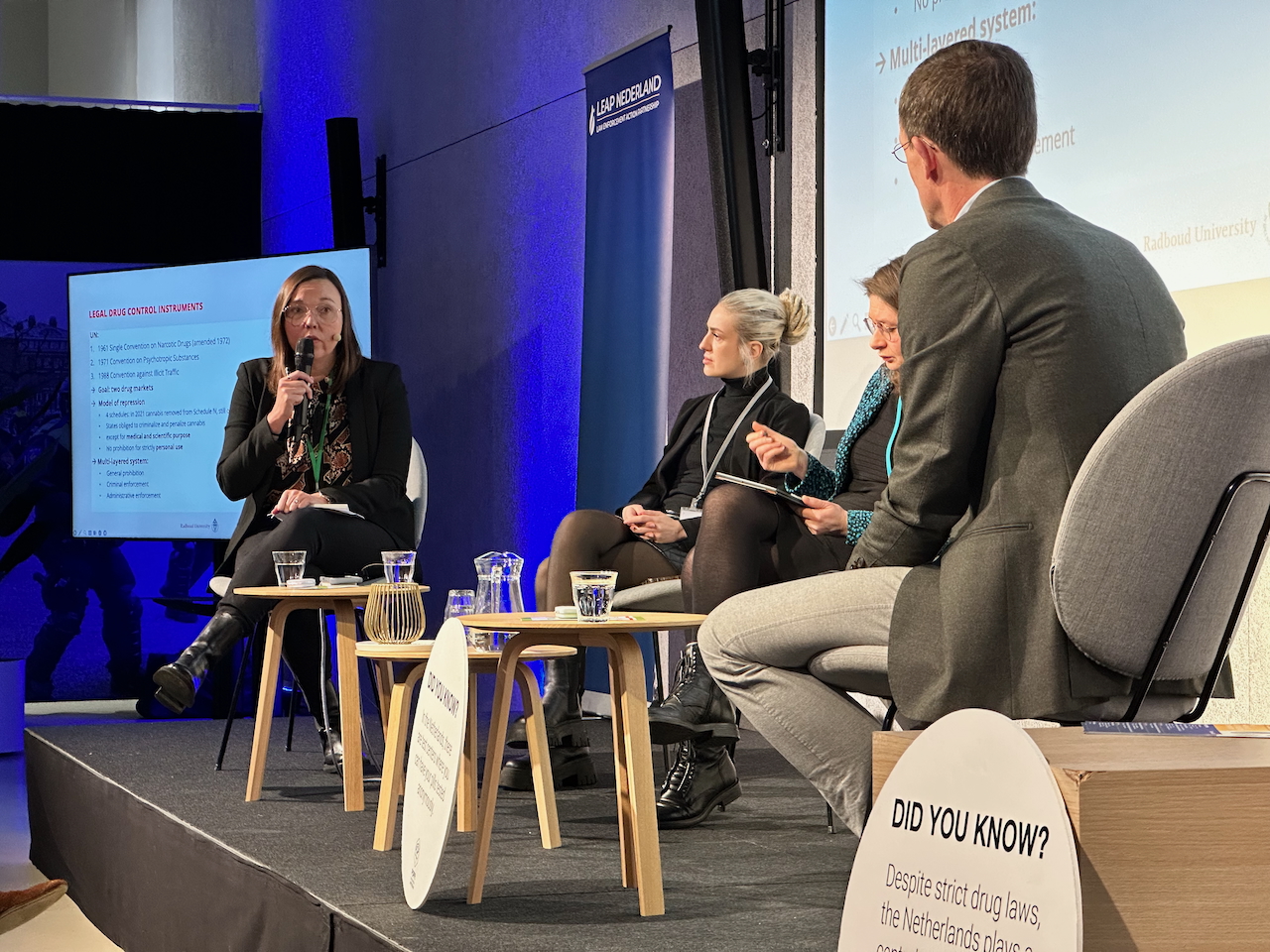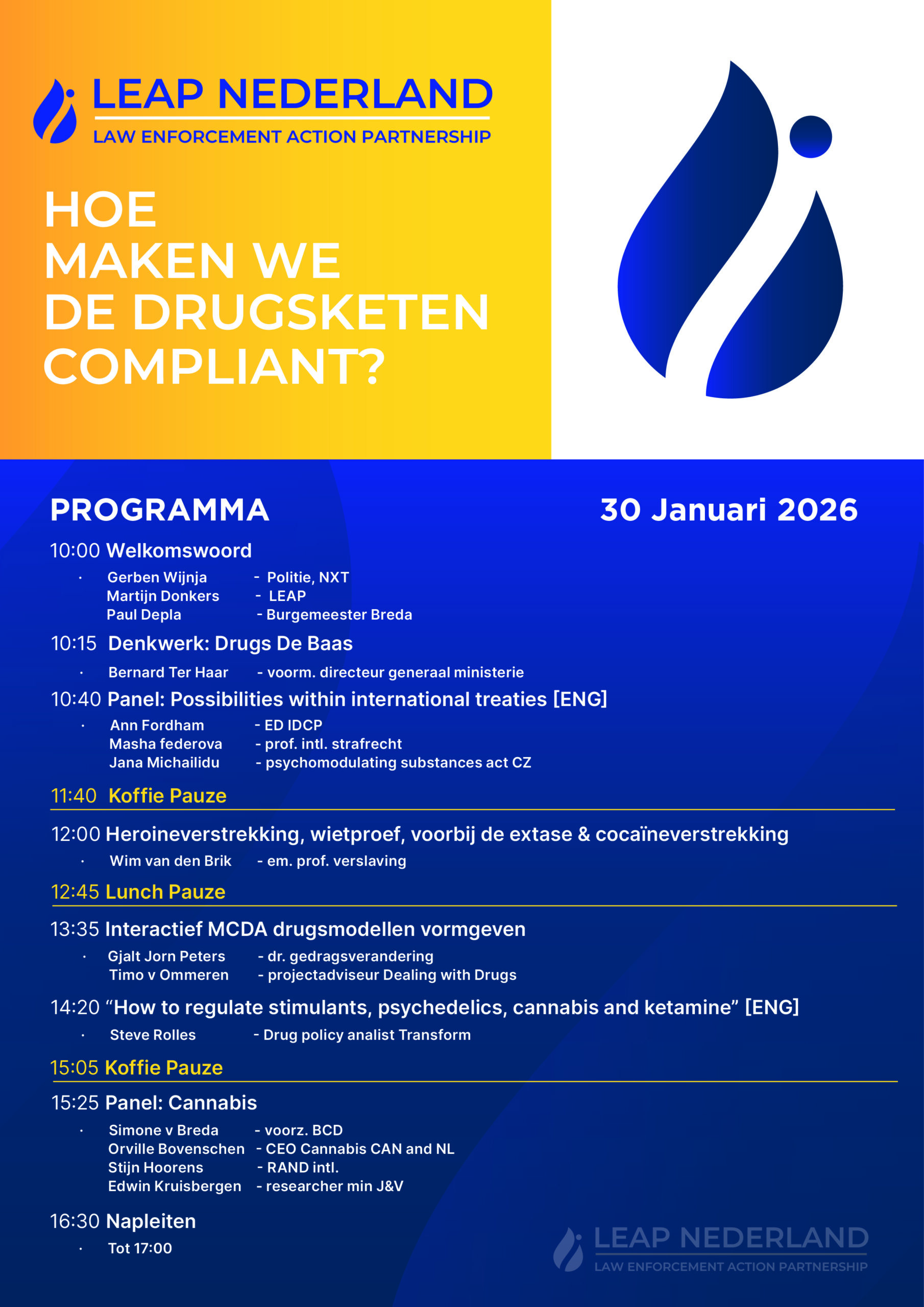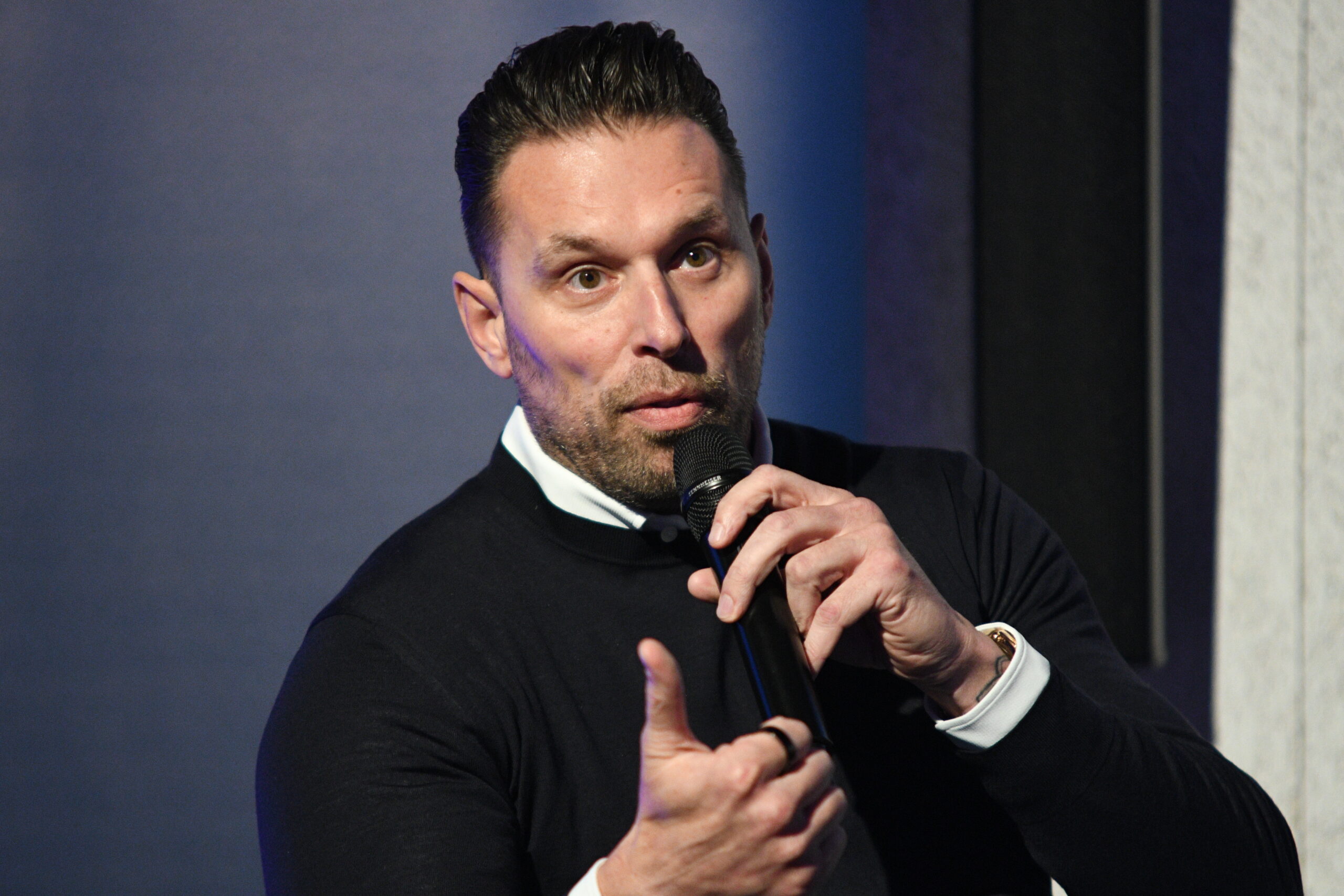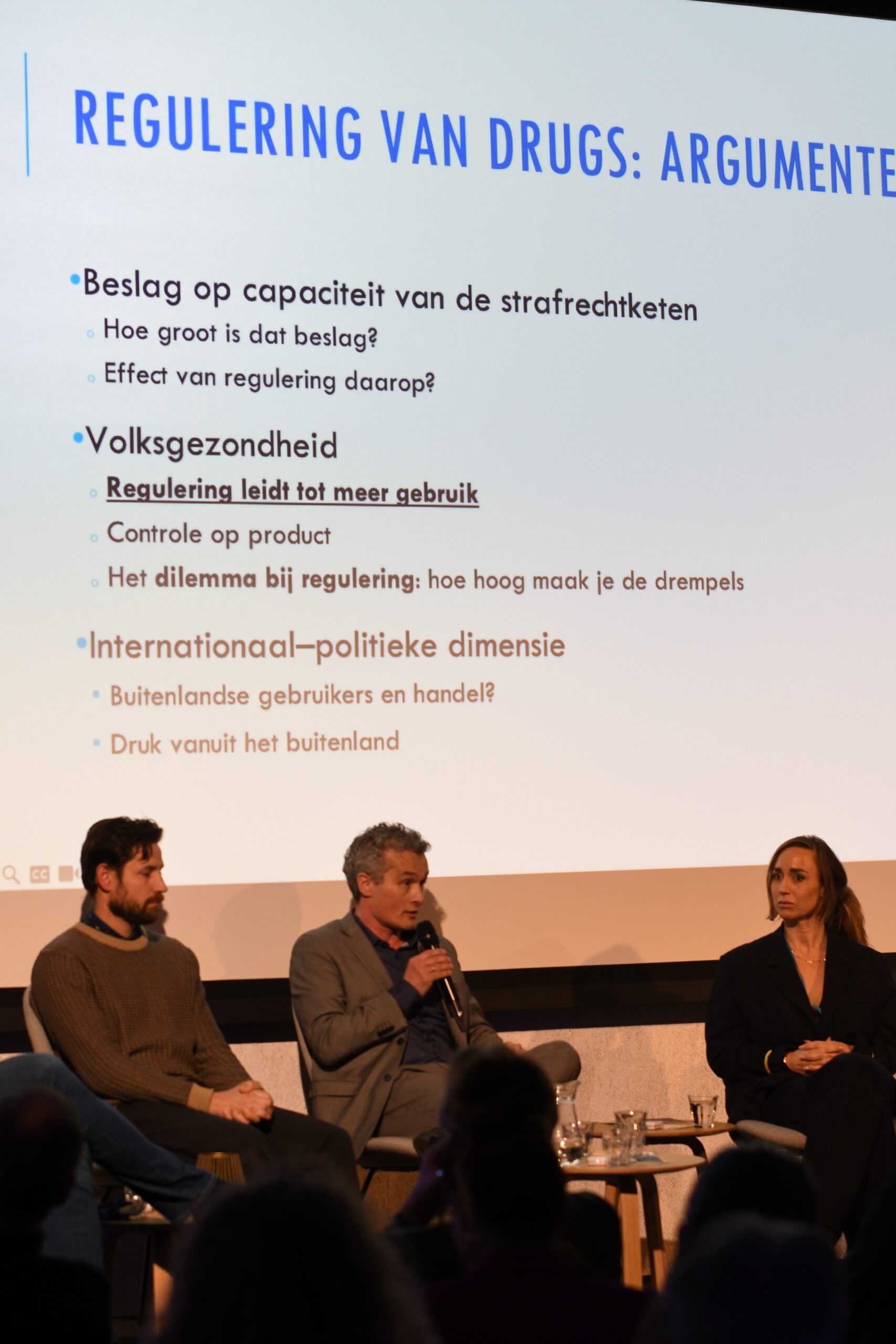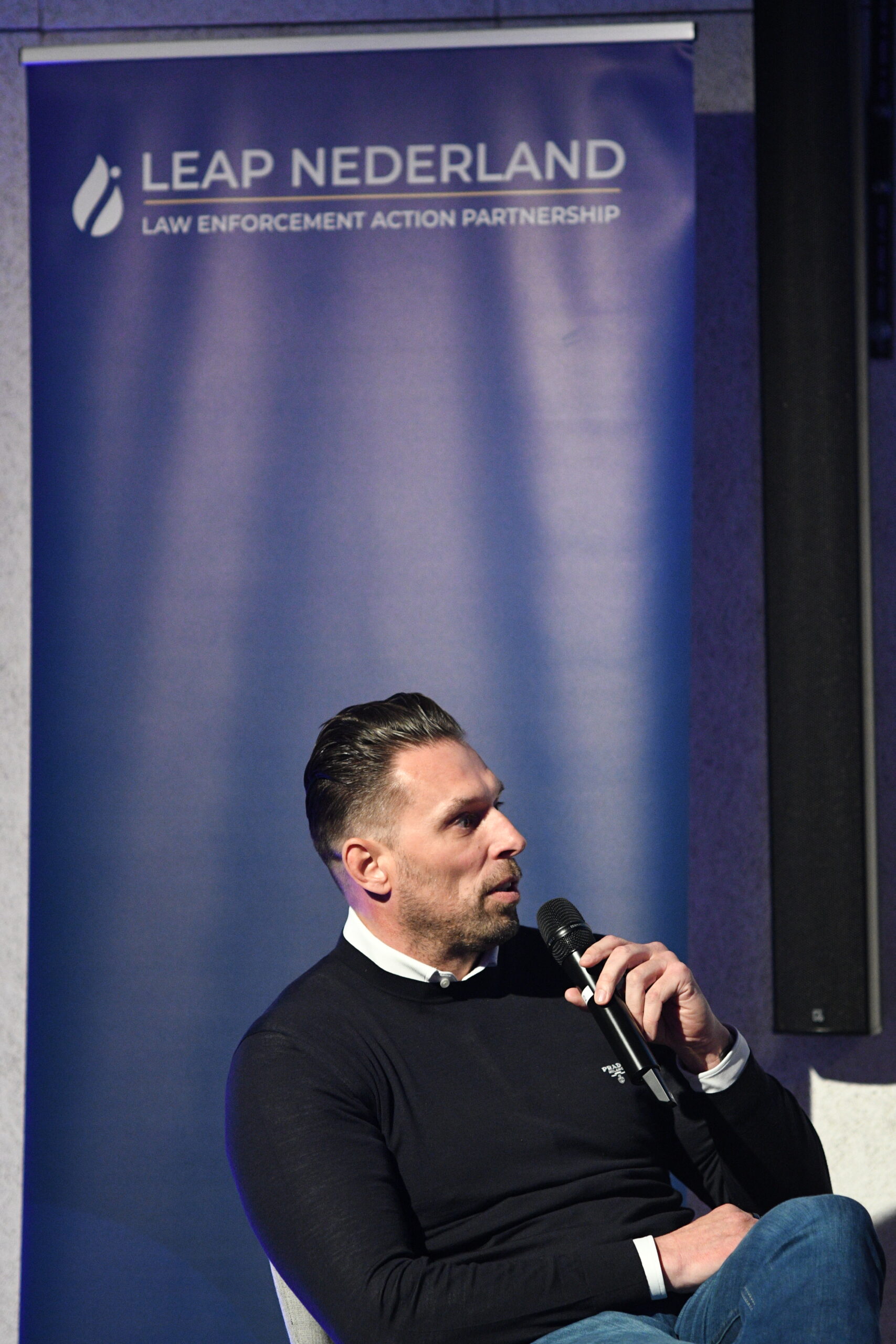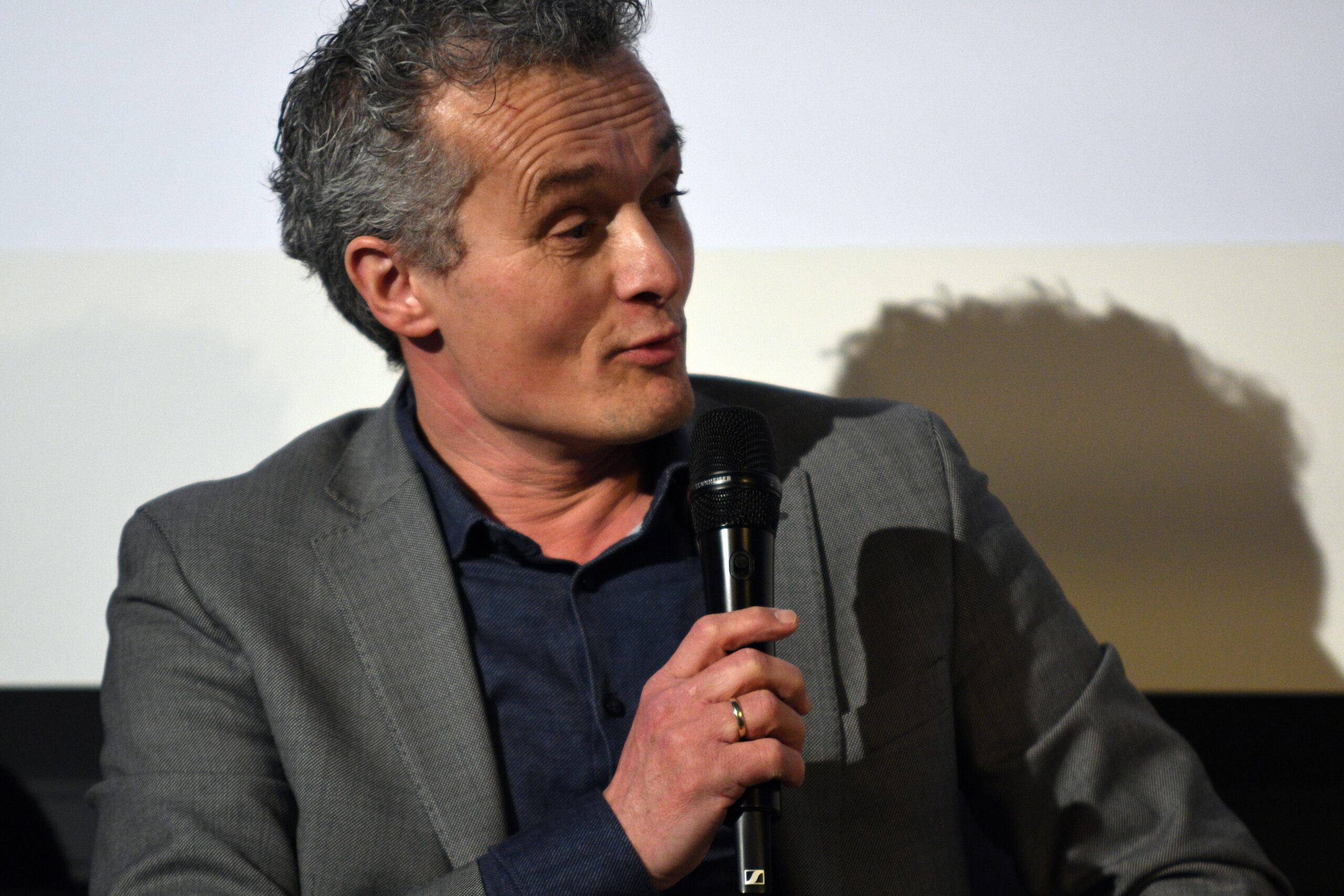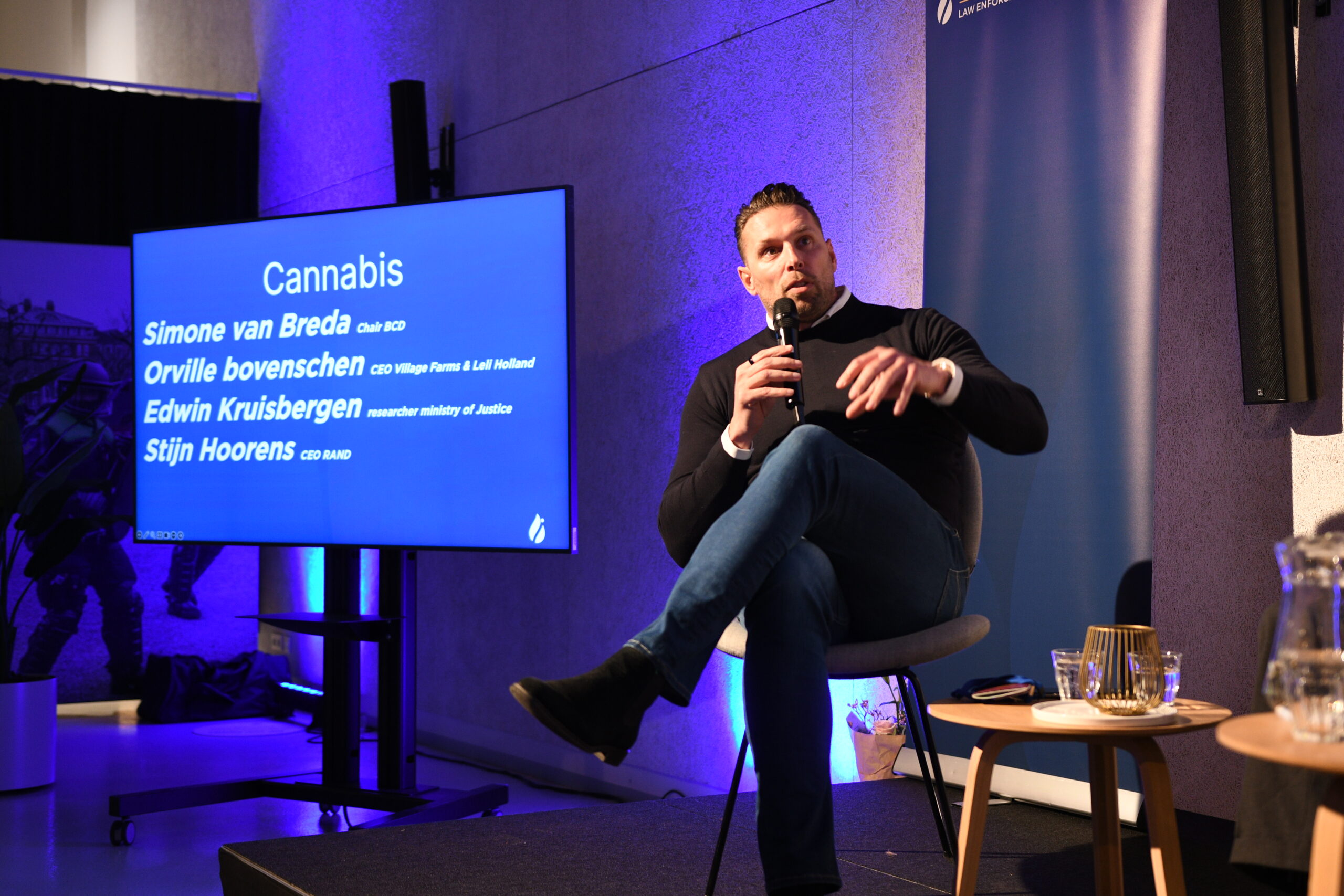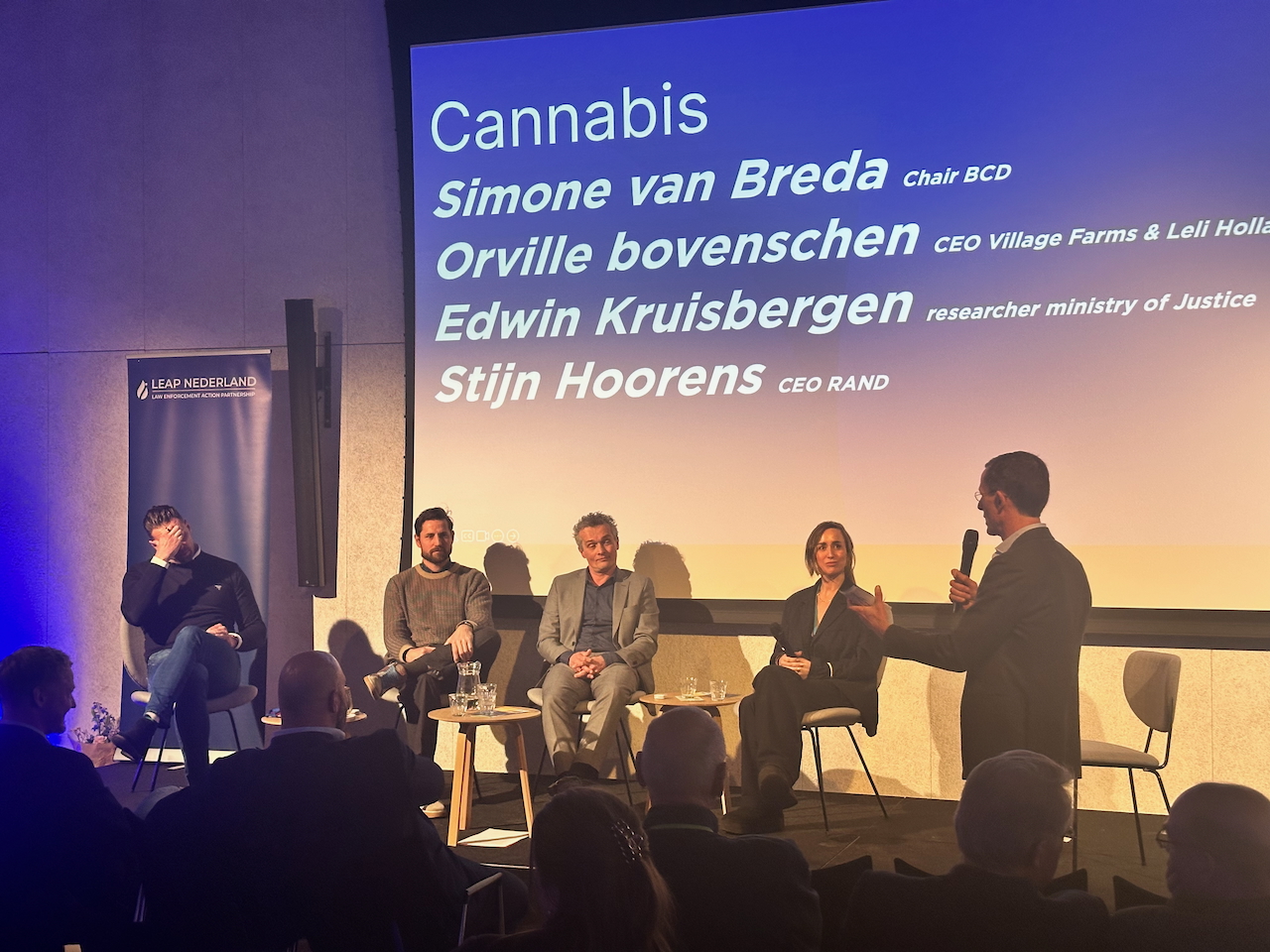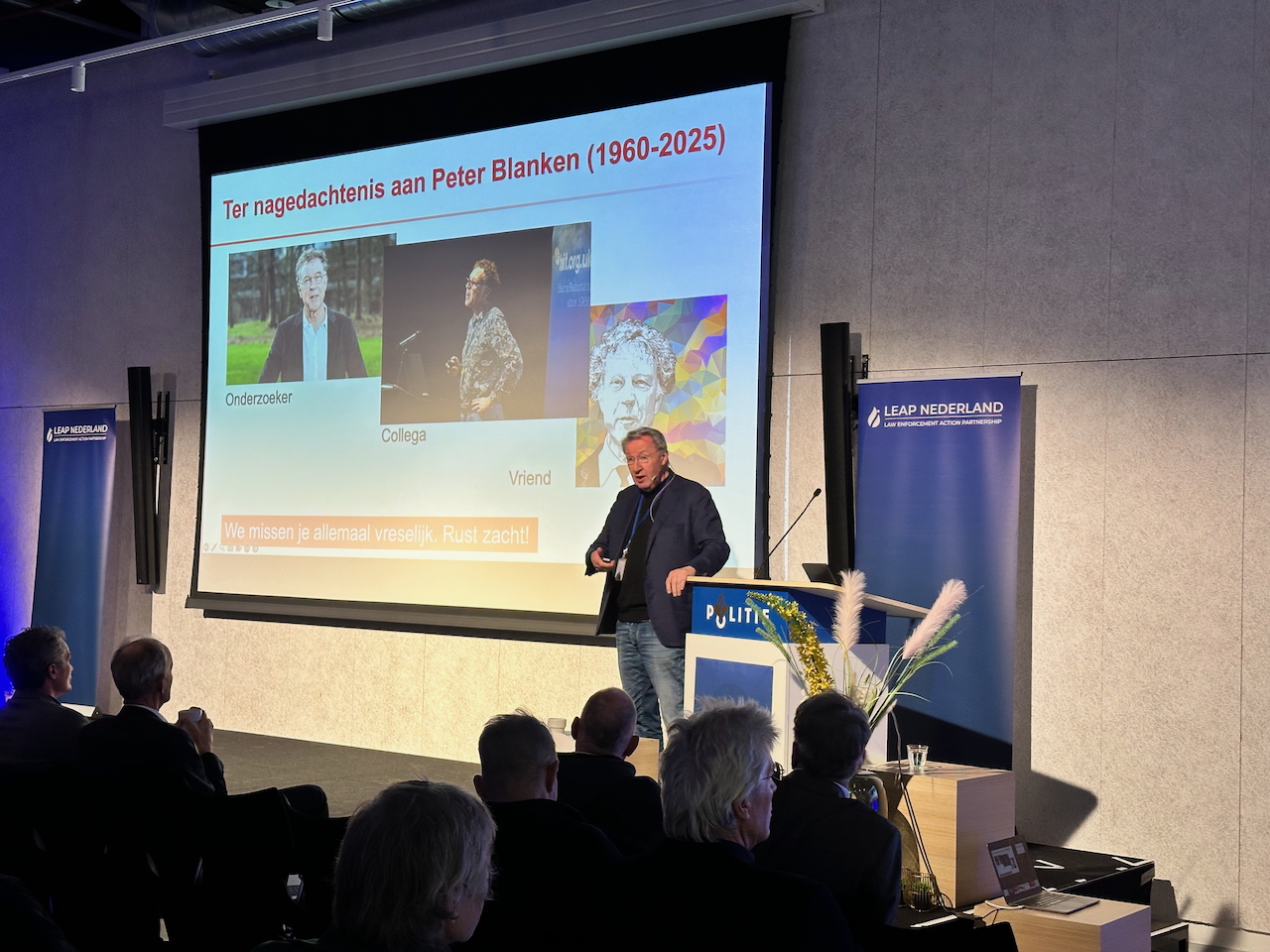


On January 30, 2026, more than 120 participants gathered at the national police expertise center HUB50 for the LEAP conference on the future of drug policy. The central question was: what could a controlled production, distribution, and consumption chain look like in order to reduce drug-related problems?
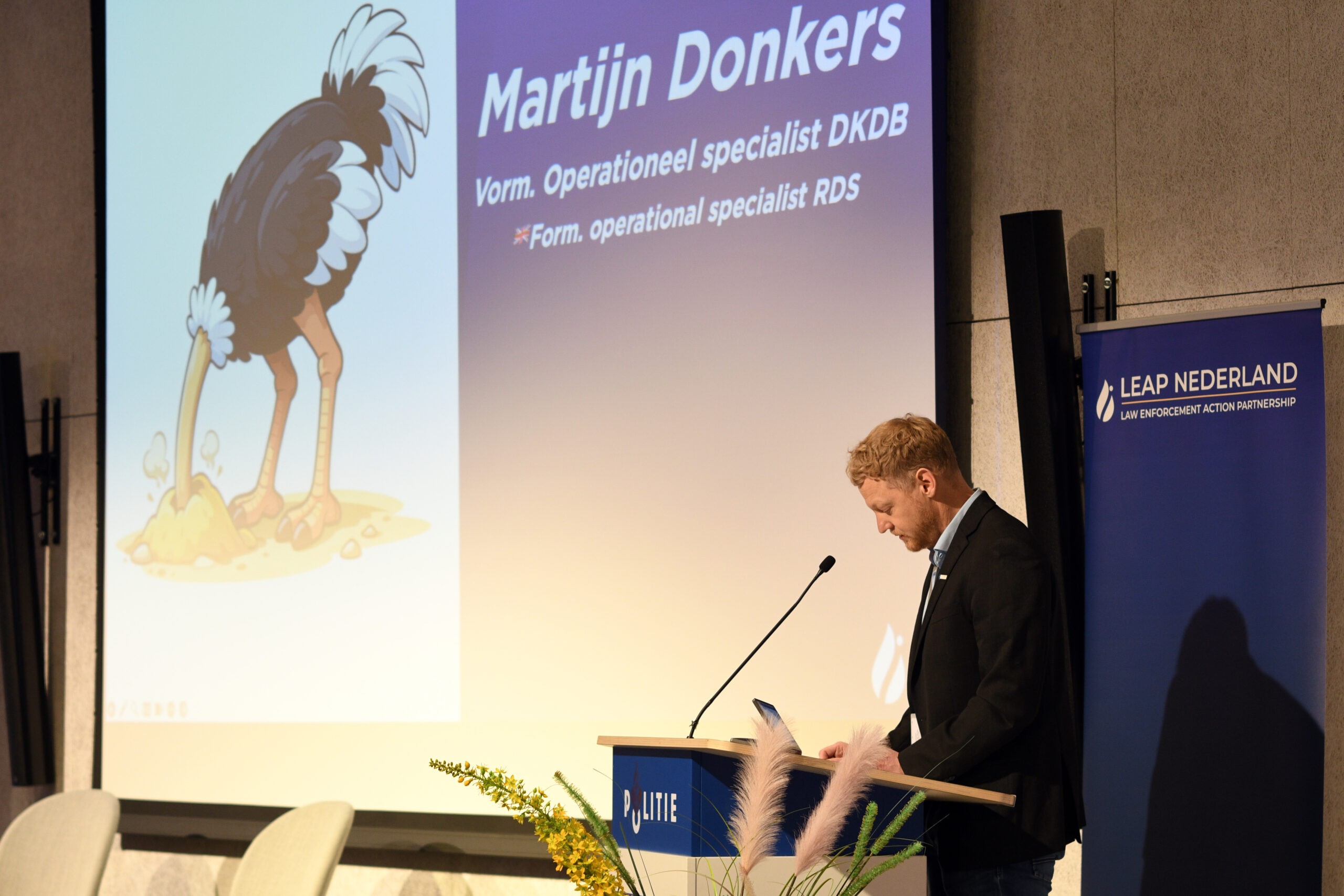
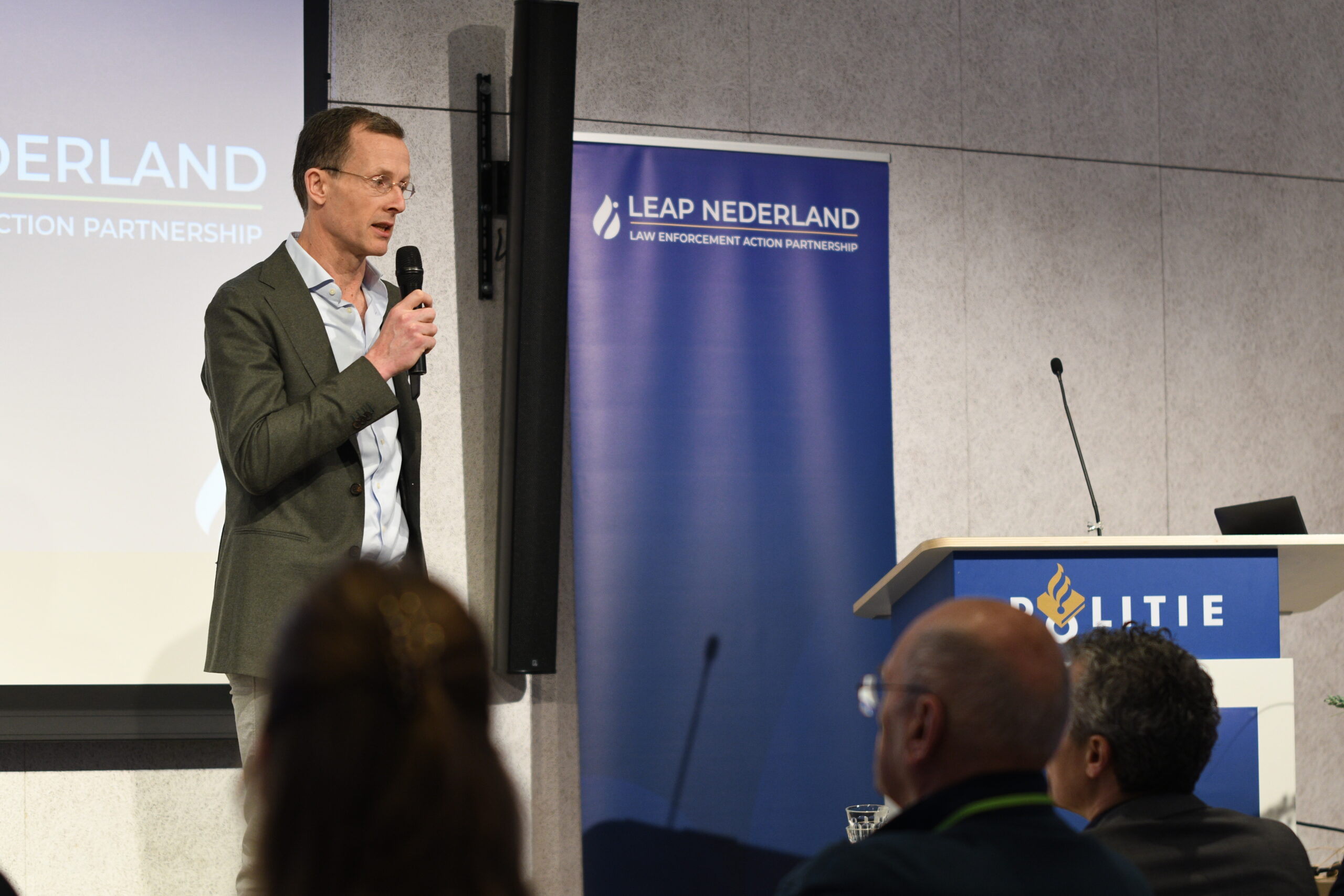
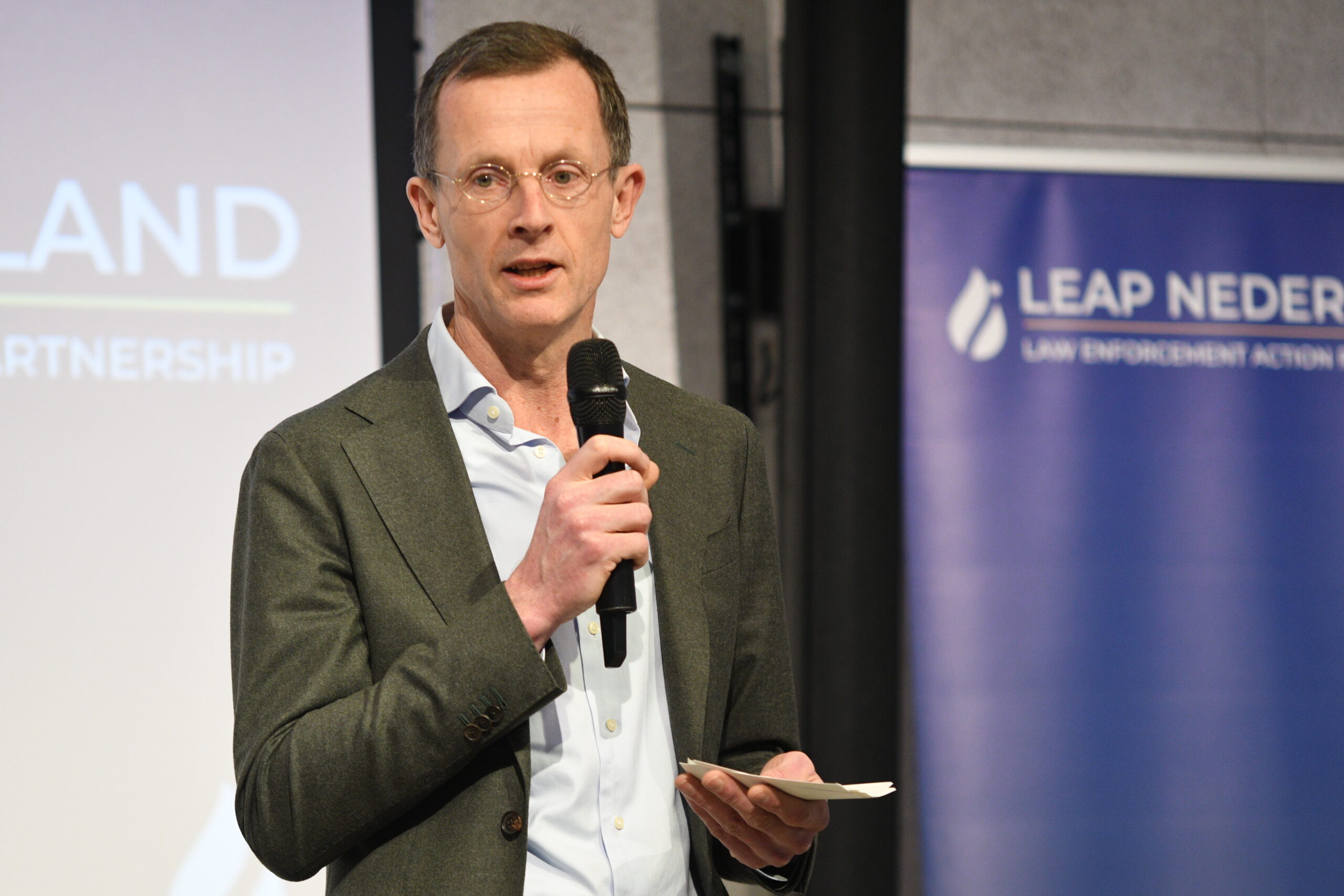
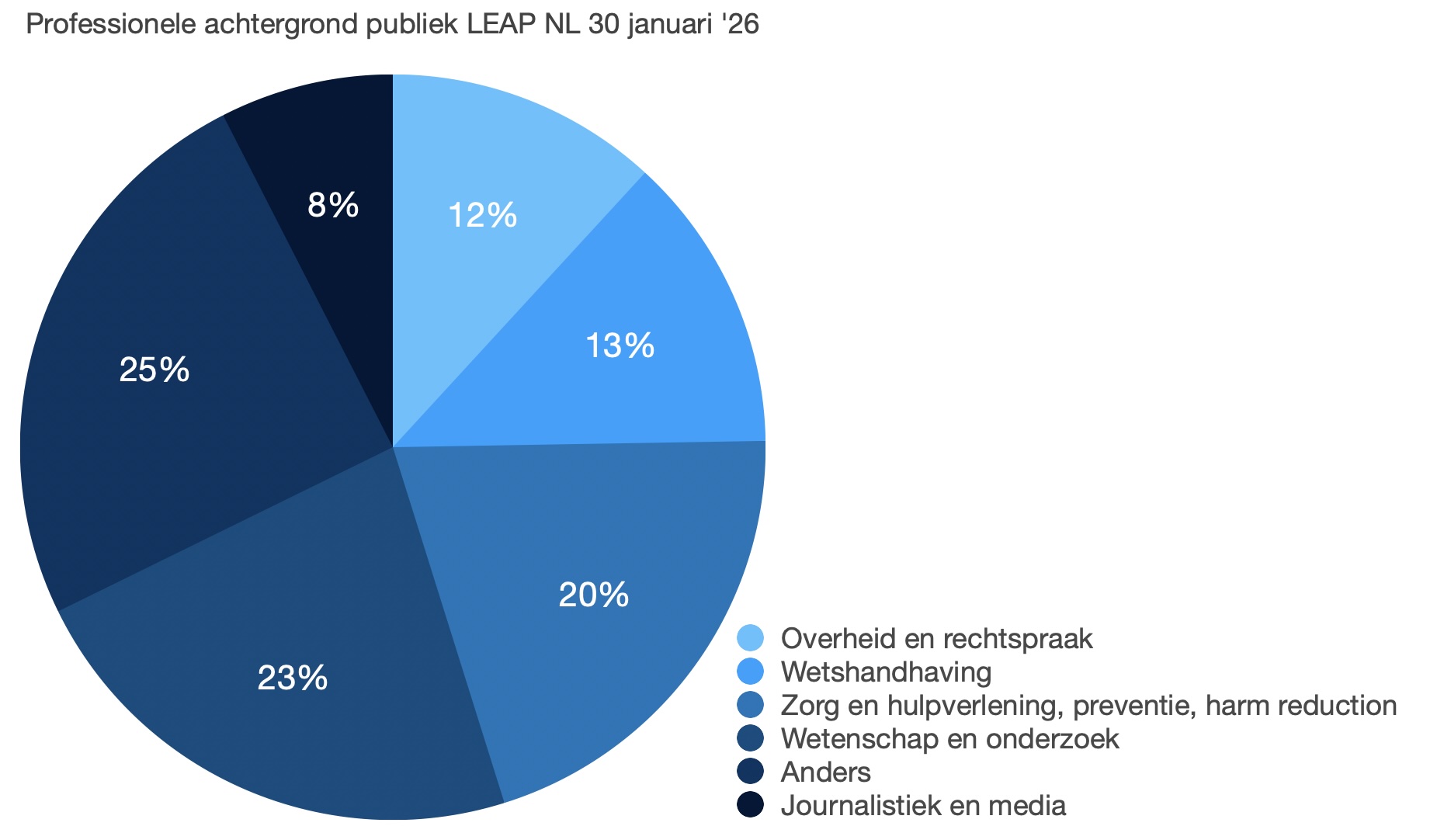
In the opening speech, LEAP member, former police officer, and security expert Martijn Donkers compared current drug policy to the behavior of an ostrich burying its head in the sand while problems continue to grow. Mayor Paul Depla emphasized the importance of jointly searching for solutions within a broad coalition. The composition of the audience also underlined the interdisciplinary nature of the issue: approximately 25% policymakers and law enforcement, 25% addiction care professionals, 25% scientists and researchers, and 25% other interested participants. Moderator and frontline officer Gerben Wijnja continuously kept the audience focused on the purpose of the meeting.
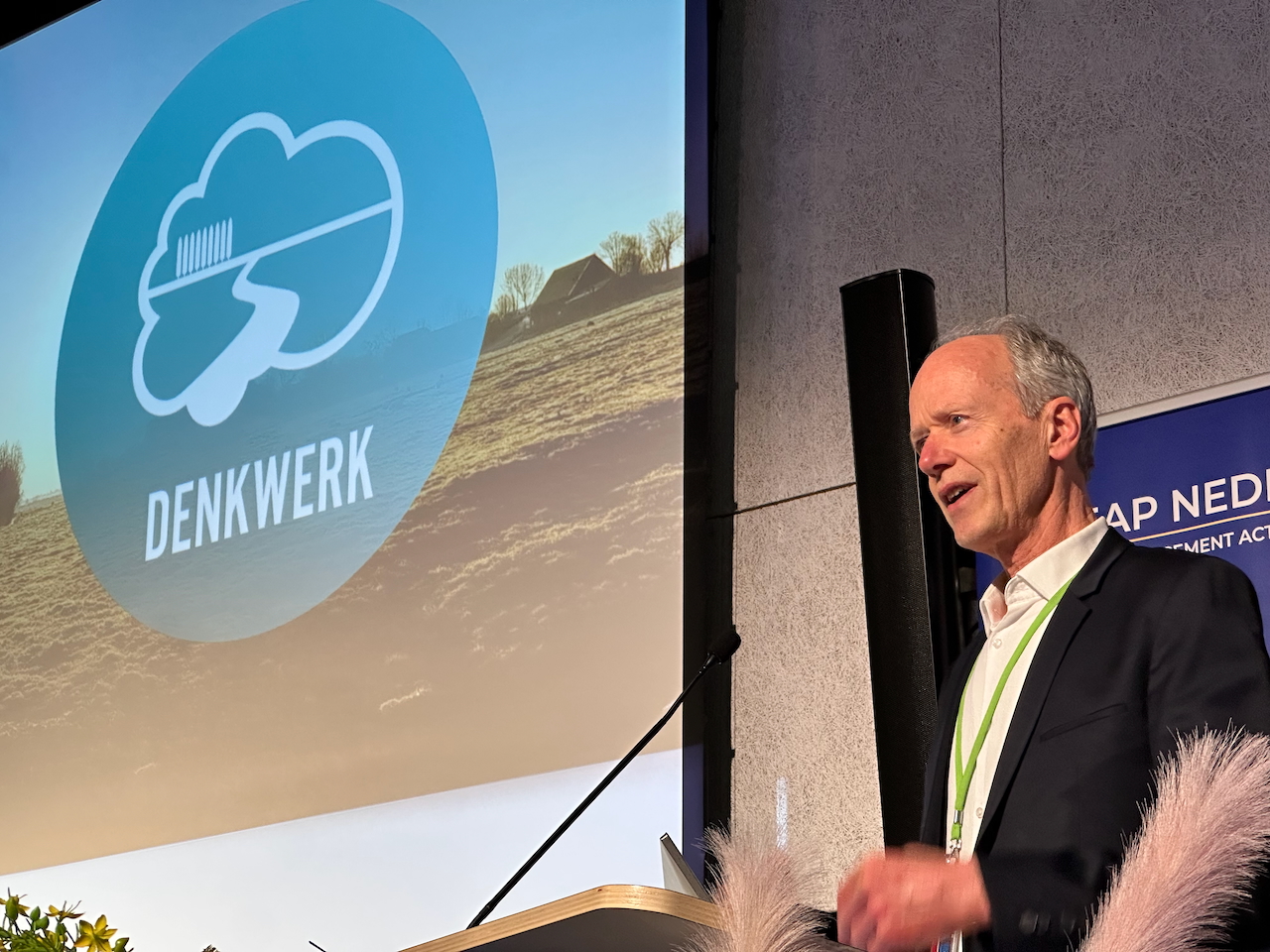
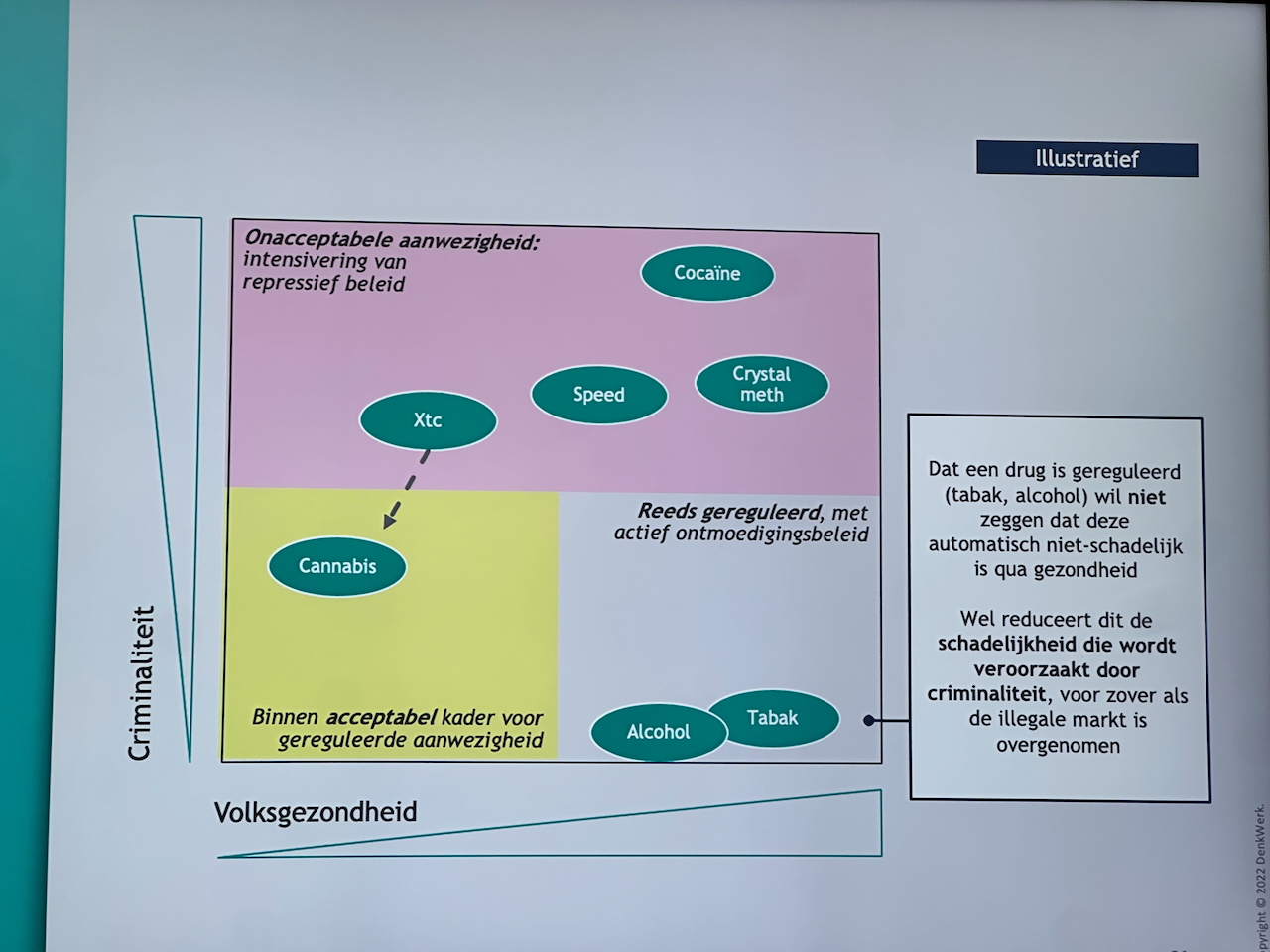
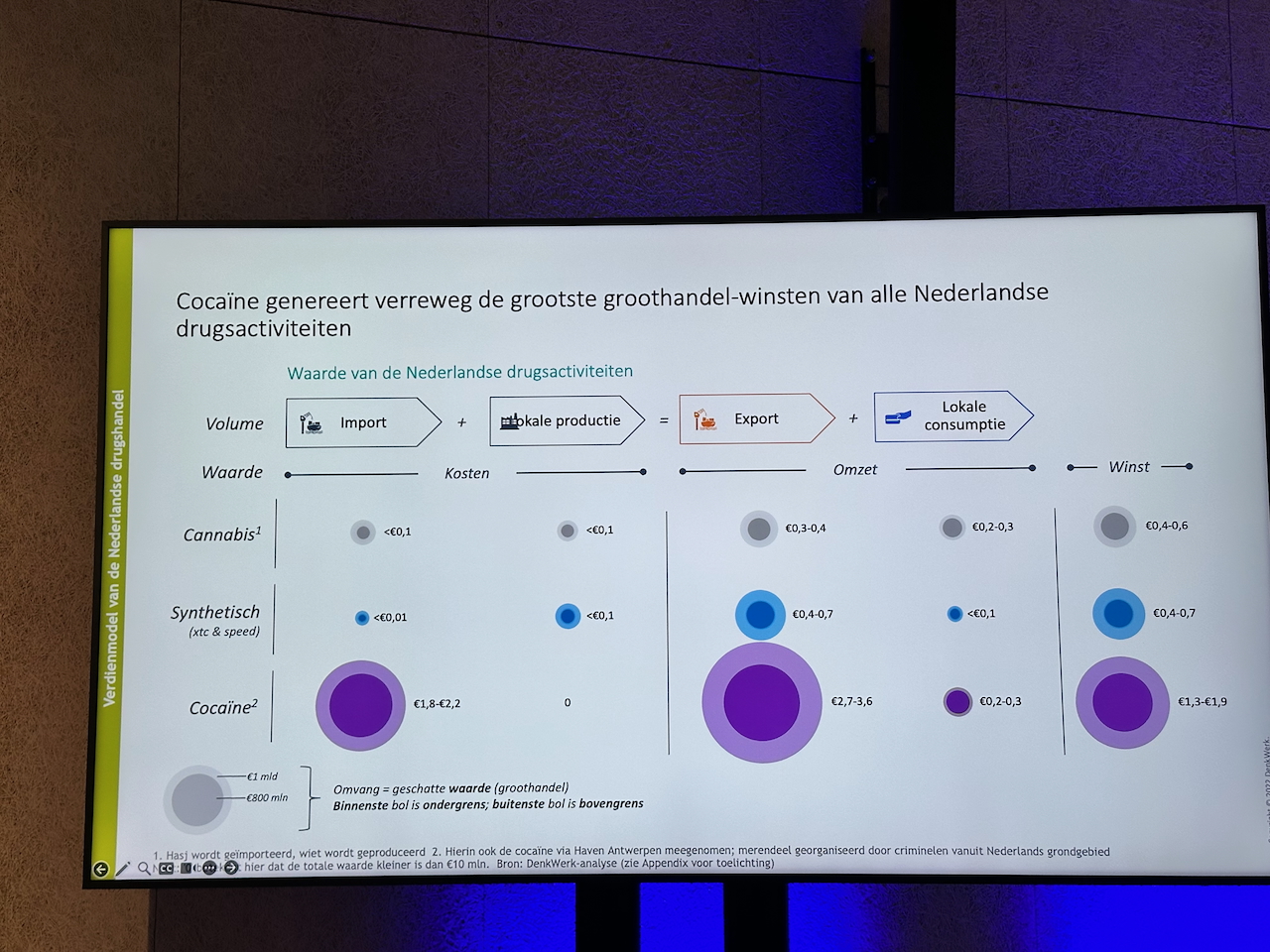
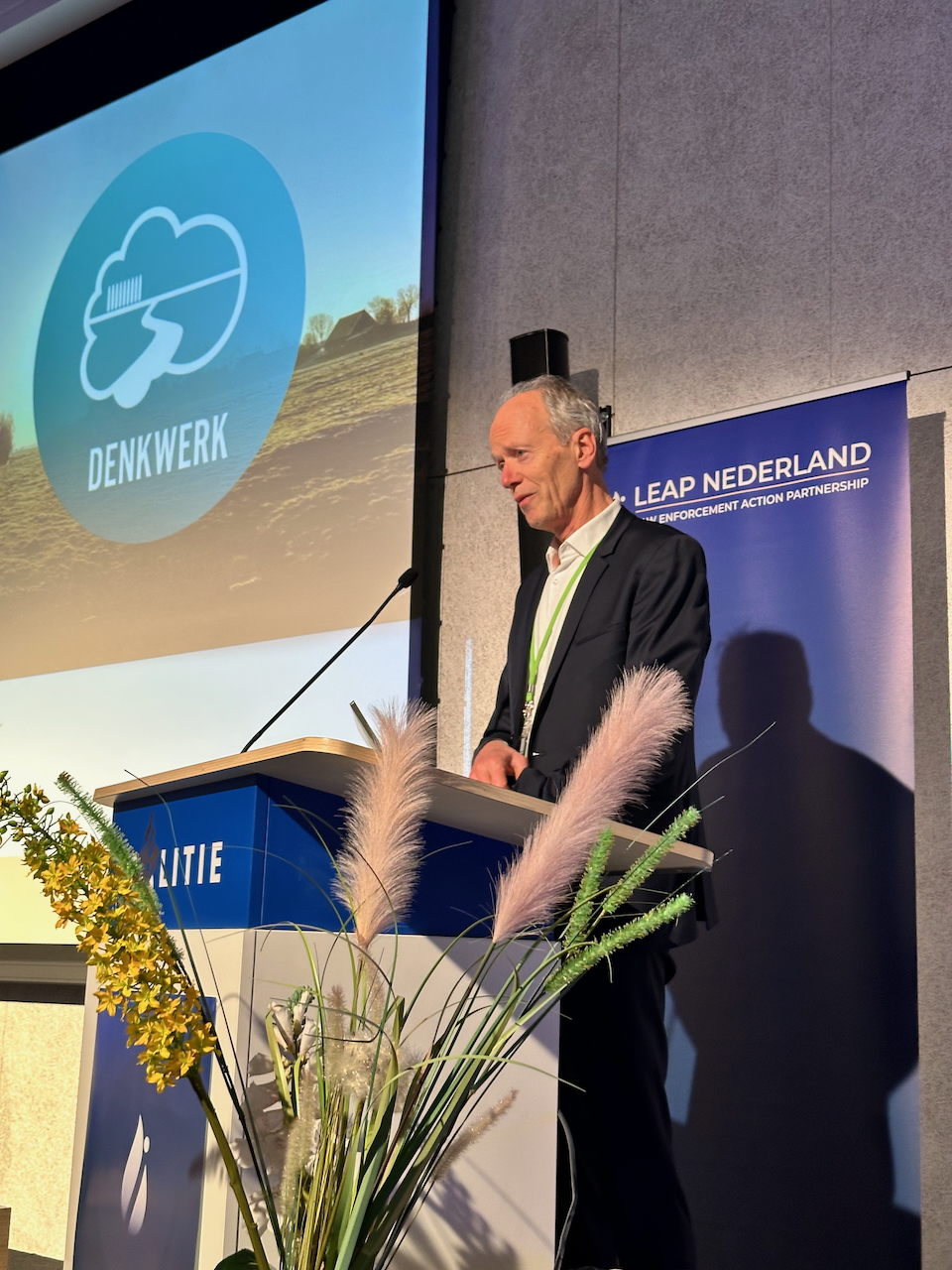
Bernard ter Haar, speaking on behalf of the Denkwerk think tank, calculated that drug trafficking constitutes a low-threshold and highly profitable business model. The commission concluded that all substances produced within our borders should be regulated as quickly as possible in order to take control of this revenue model. Ter Haar stated that policy is more likely to succeed if social support is also created—something that regulation promotes, because people sometimes have positive reasons for using drugs and are therefore less willing to support repressive policies. Prohibition, in this way, also undermines authority as a whole.
Human rights and international treaties
To explore alternative drug policies, attention then turned to the possibilities offered by international law. In this panel, Professor of International Criminal Law Masha Fedorova presented her academic analysis, concluding that human rights treaties take precedence over drug control treaties, while these treaty systems conflict with each other on multiple points. To harmonize them, regulation must, in her view, meet five conditions, which can be summarized as:
-
Protect fundamental rights
-
Protect health
-
Ensure democratic anchoring
-
Ensure a nationally closed system
-
Focus on deterrence and education
These five principles repeatedly emerged as a common thread throughout later contributions during the day.

Ann Fordham, Executive Director of the International Drug Policy Consortium (IDPC), showed in the panel how, for example, the coca leaf could easily be regulated within these conditions. The coca leaf is comparable to coffee, and its prohibition is, according to her, historically rooted in racist assumptions. Recent attempts to reclassify the leaf through UN mechanisms have failed, demonstrating that the old treaties are losing their relevance. She therefore welcomed the decision by member states to undertake a thorough independent evaluation of the entire UN drug control system.
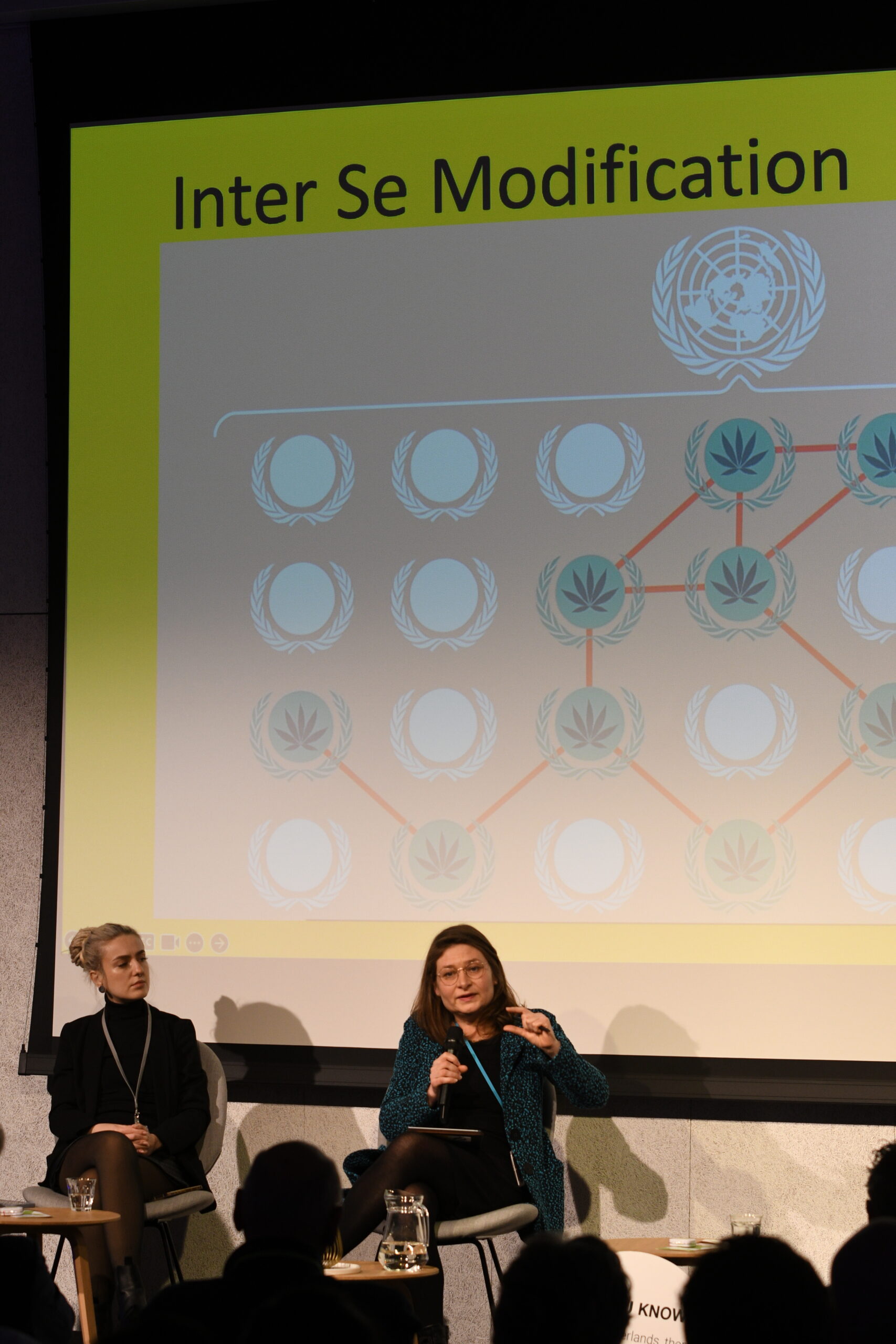
A possible intermediate step is so-called inter se modification: states conclude agreements among themselves that better reconcile human rights and drug treaties. The UN conventions provide space for such cooperation.

European Frameworks and the Czech Example
Drug treaties between EU member states form another obstacle. Within the EU, regulated psychoactive substances formally do not fit into existing categories. They are not food, not supplements, and not medicines. Advisor to the Czech Ministry of Justice Jana Michailidu explained how her legislative proposal broke this impasse with the Psychomodulating Substances Act. This adopted law creates a separate legal framework with age limits, quality standards, and licenses for production and sale of specific substances. Notably, it enjoys broad political support precisely because the government now has more control than under a situation without regulation.
Science: controlled Supply Works
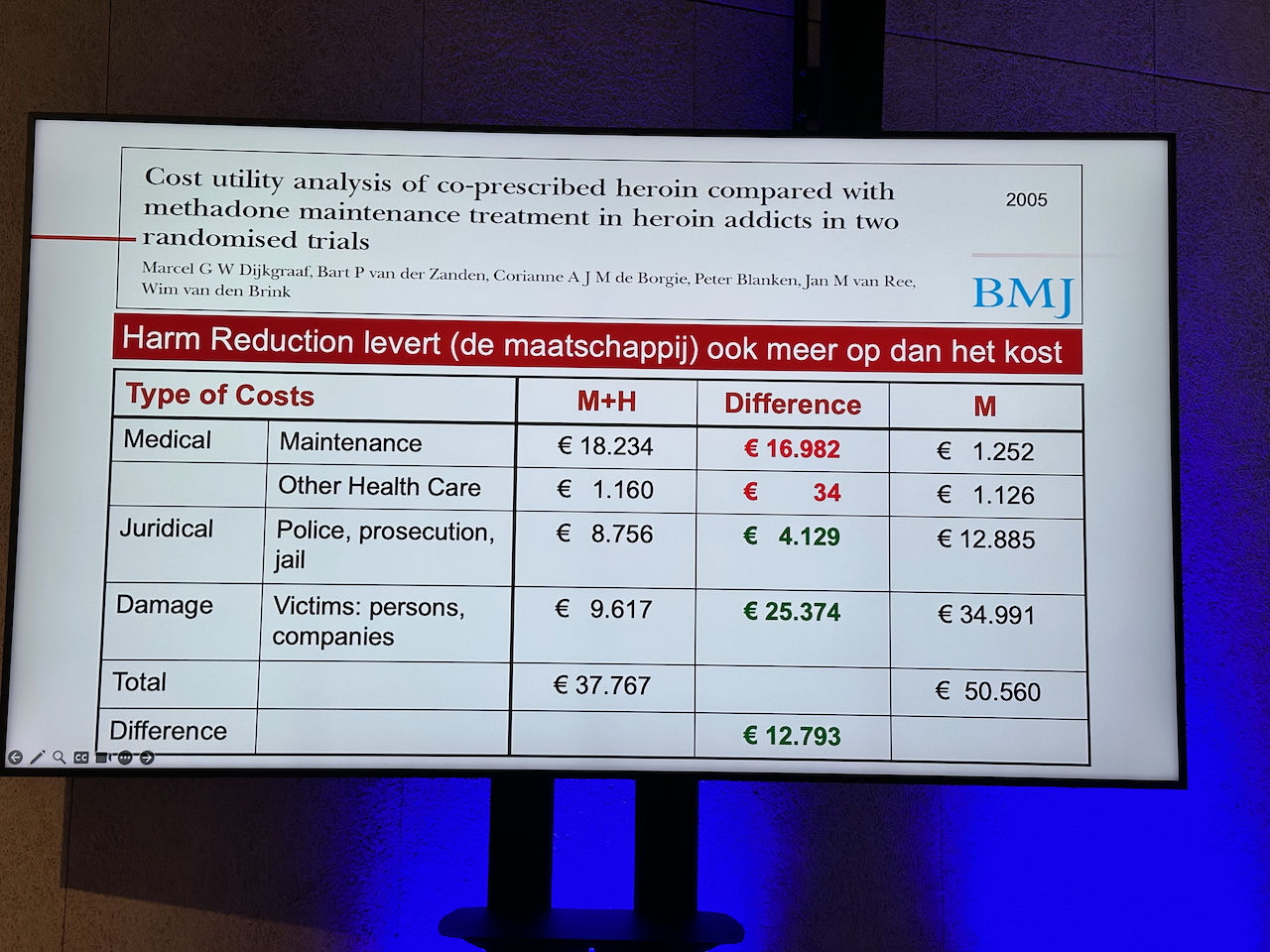
Professor of Addiction Medicine Wim van den Brink presented robustly supported research on controlled dispensing and cost-saving interventions. For example, overall societal harm drops from approximately €50,000 to €38,000 per user per year when heroin is legally and freely provided.
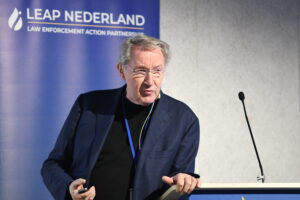
He also discussed research into dexamphetamine as a substitute for crack cocaine use and the first results of the Mainline study on controlled crack provision. The highly marginalized target group is strikingly positive about this approach.
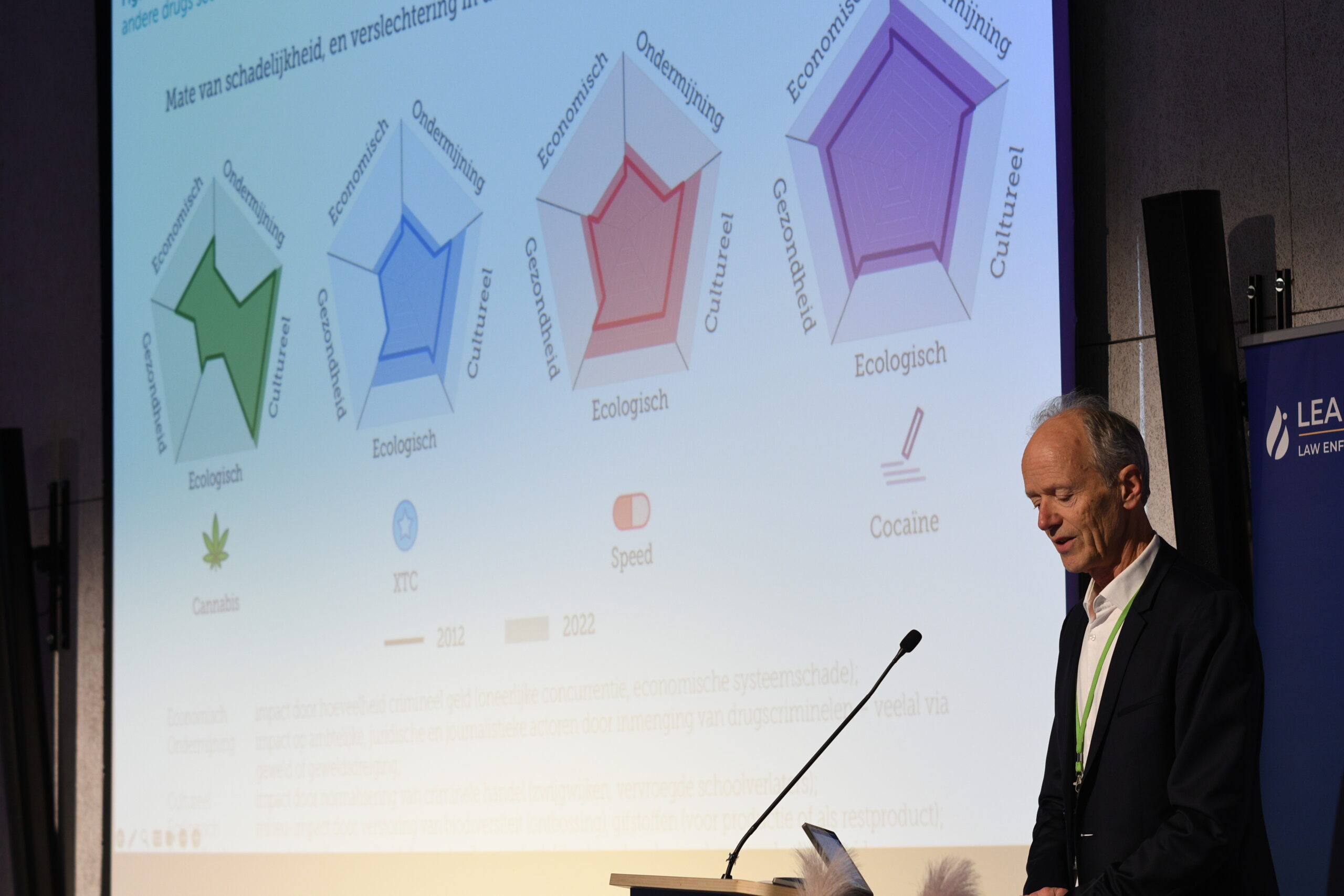
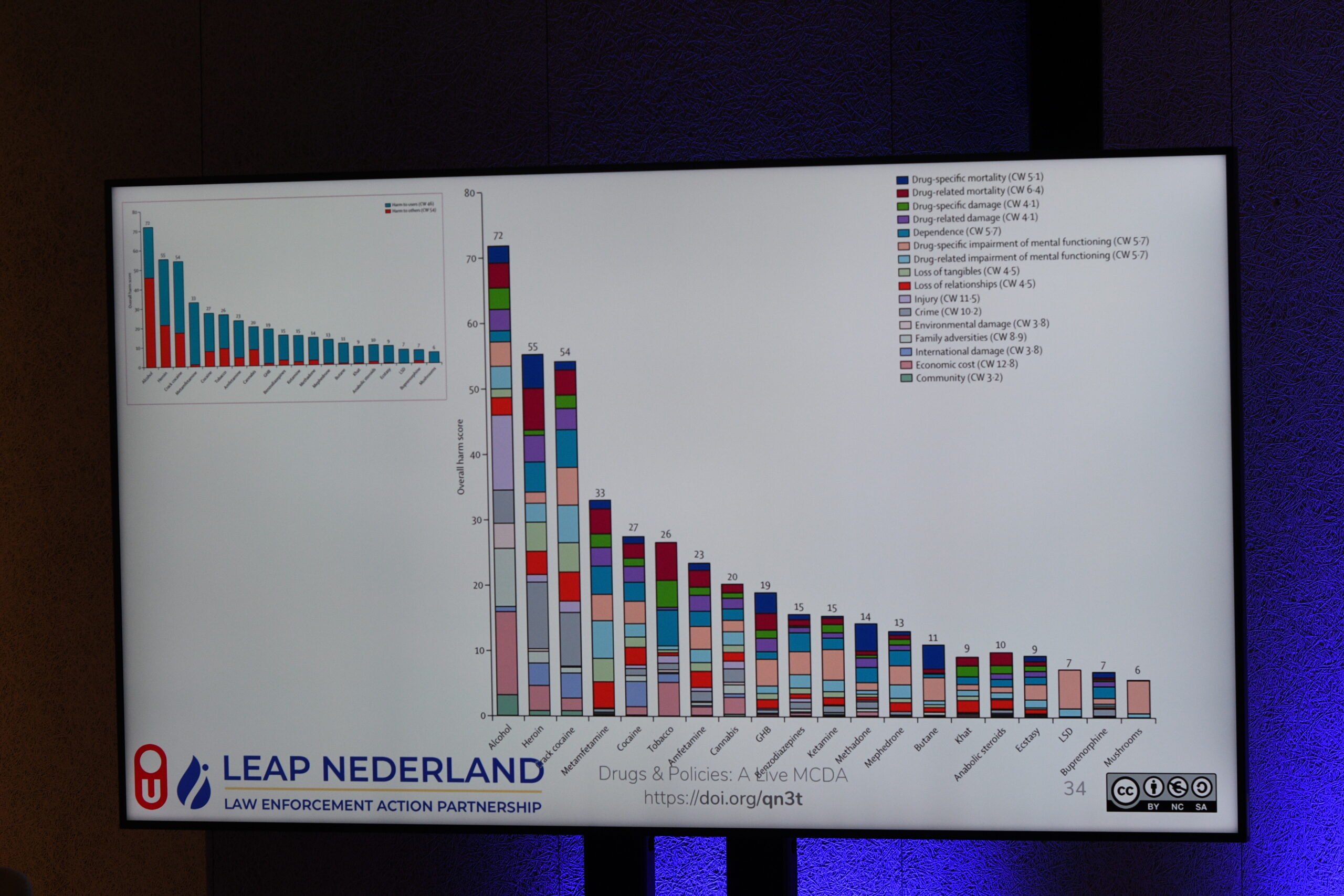
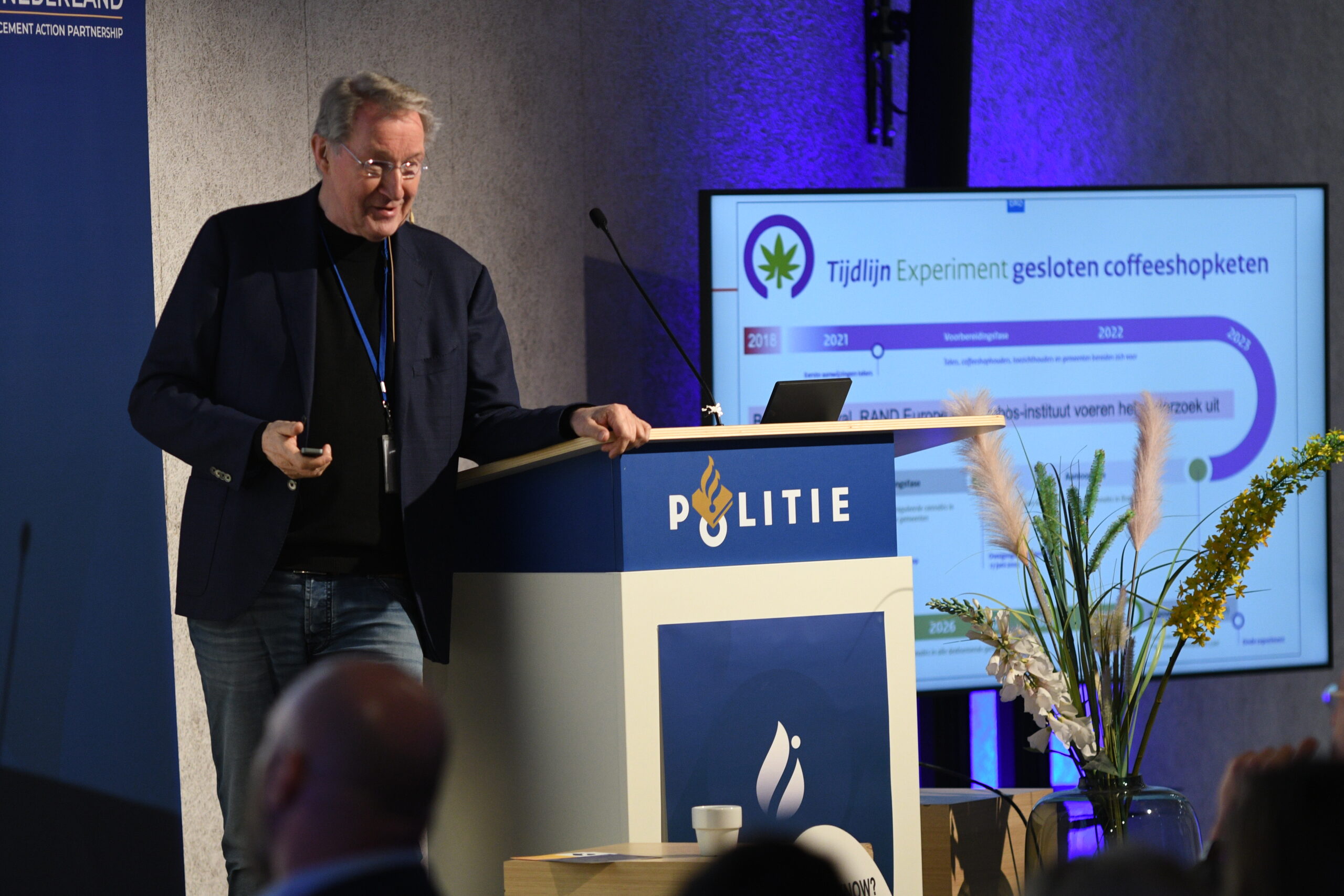
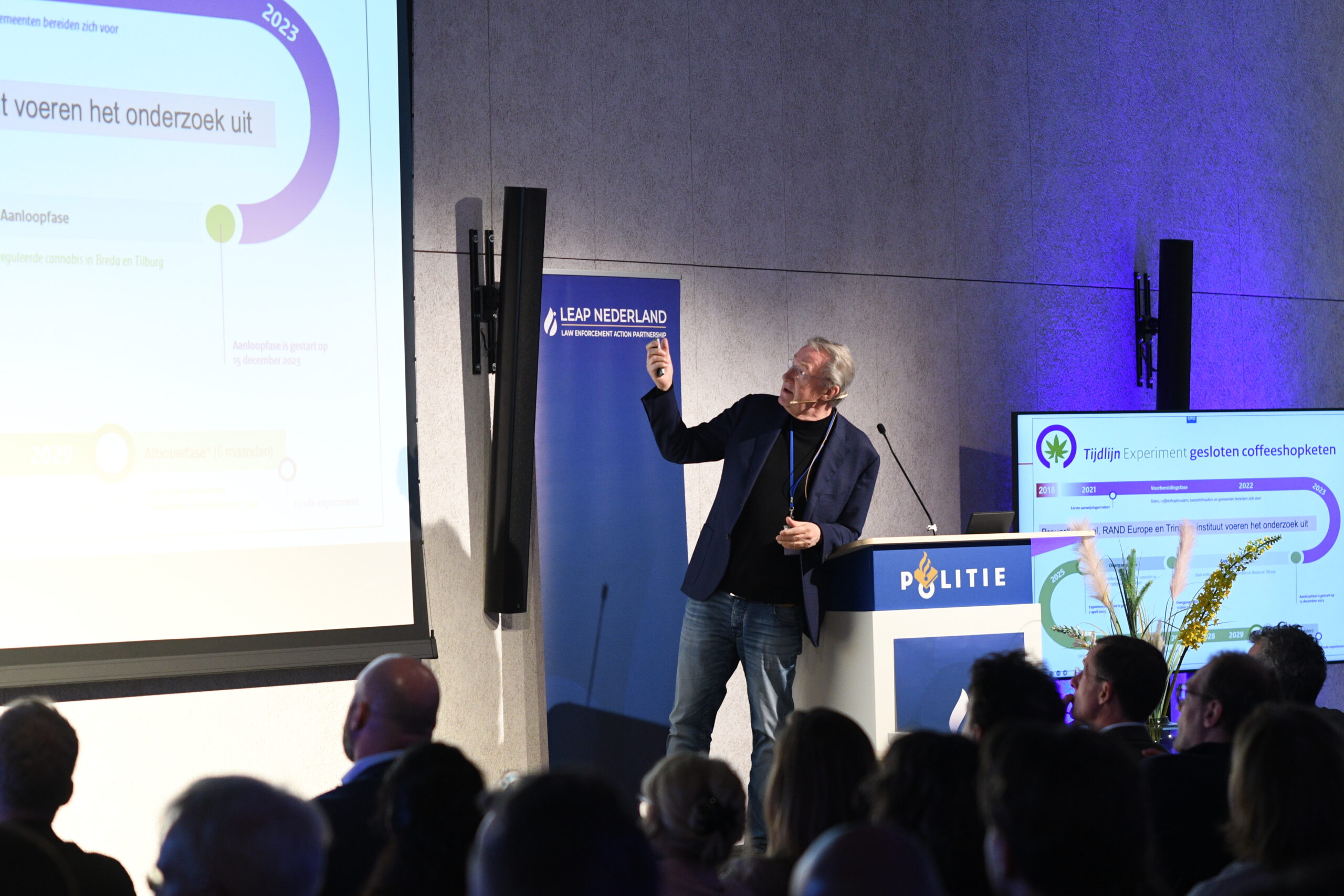
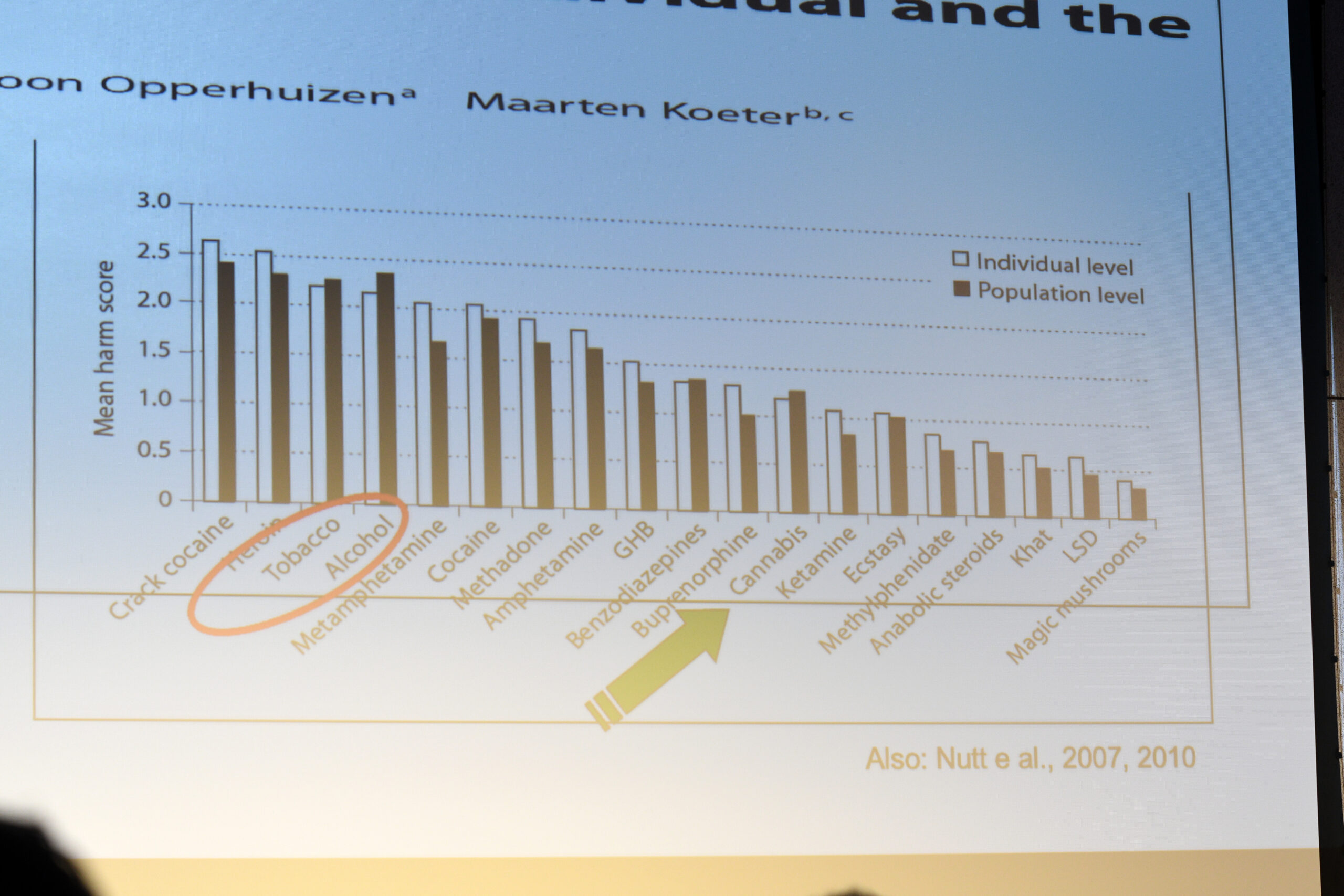
Additionally, Van den Brink briefly covered cannabis and psychosis, methodologies for measuring and comparing drug-related harm across substances, the design of the Dutch cannabis experiment, and efforts to find consensus around MDMA (ecstasy) regulation. His plea to reverse the subsidy freeze for Mainline received loud applause.
Live MCDA: Regulation Scores Better
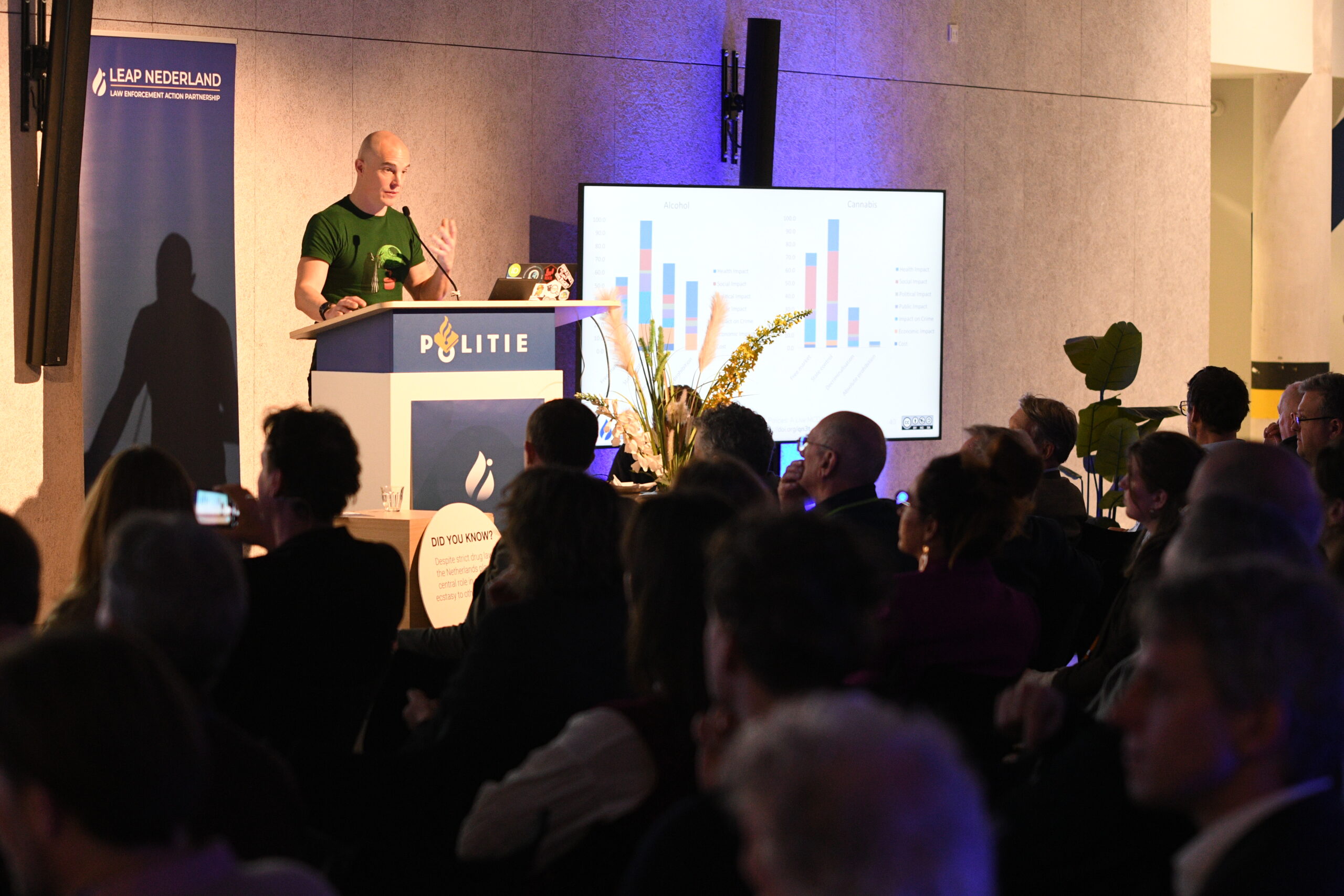
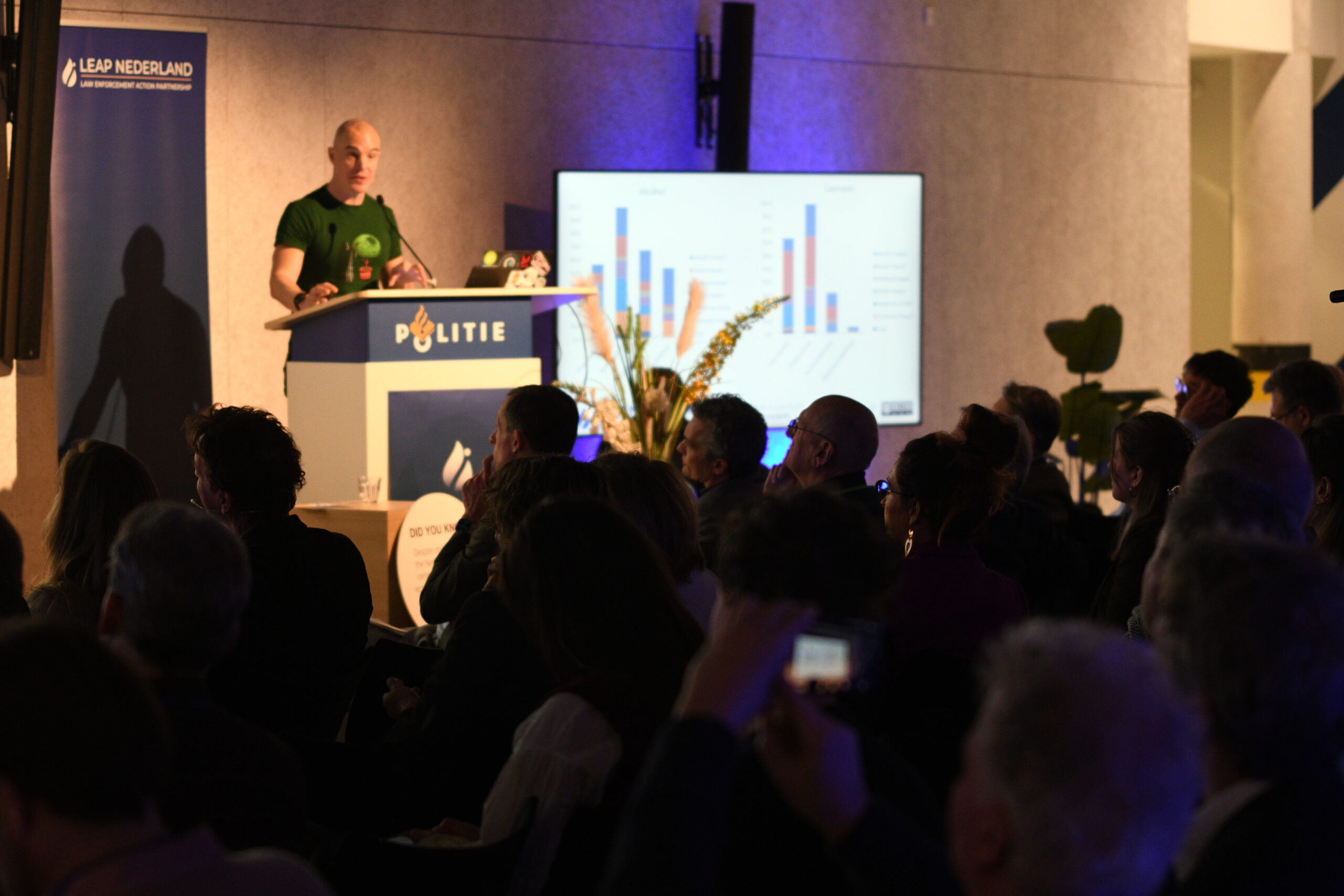
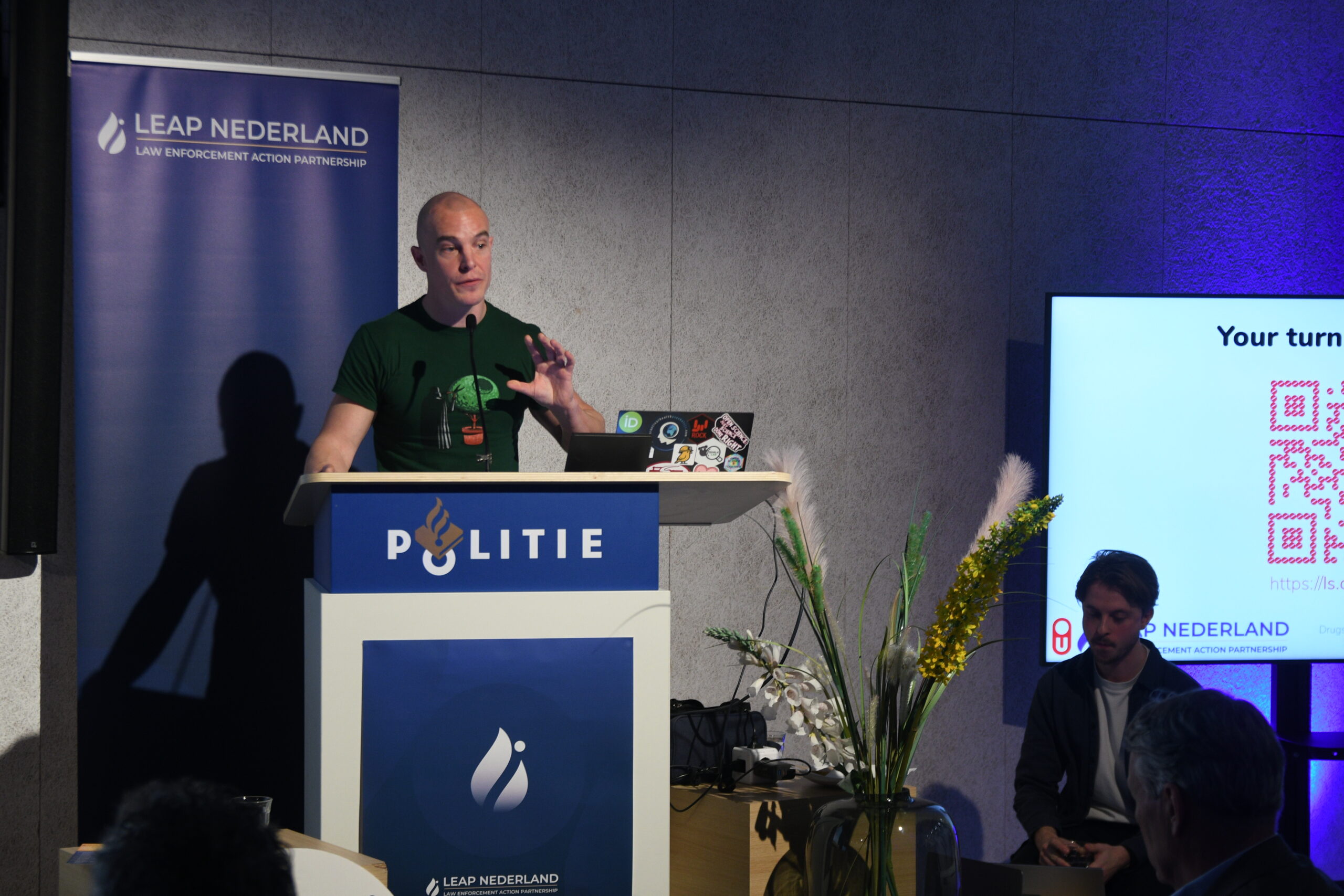
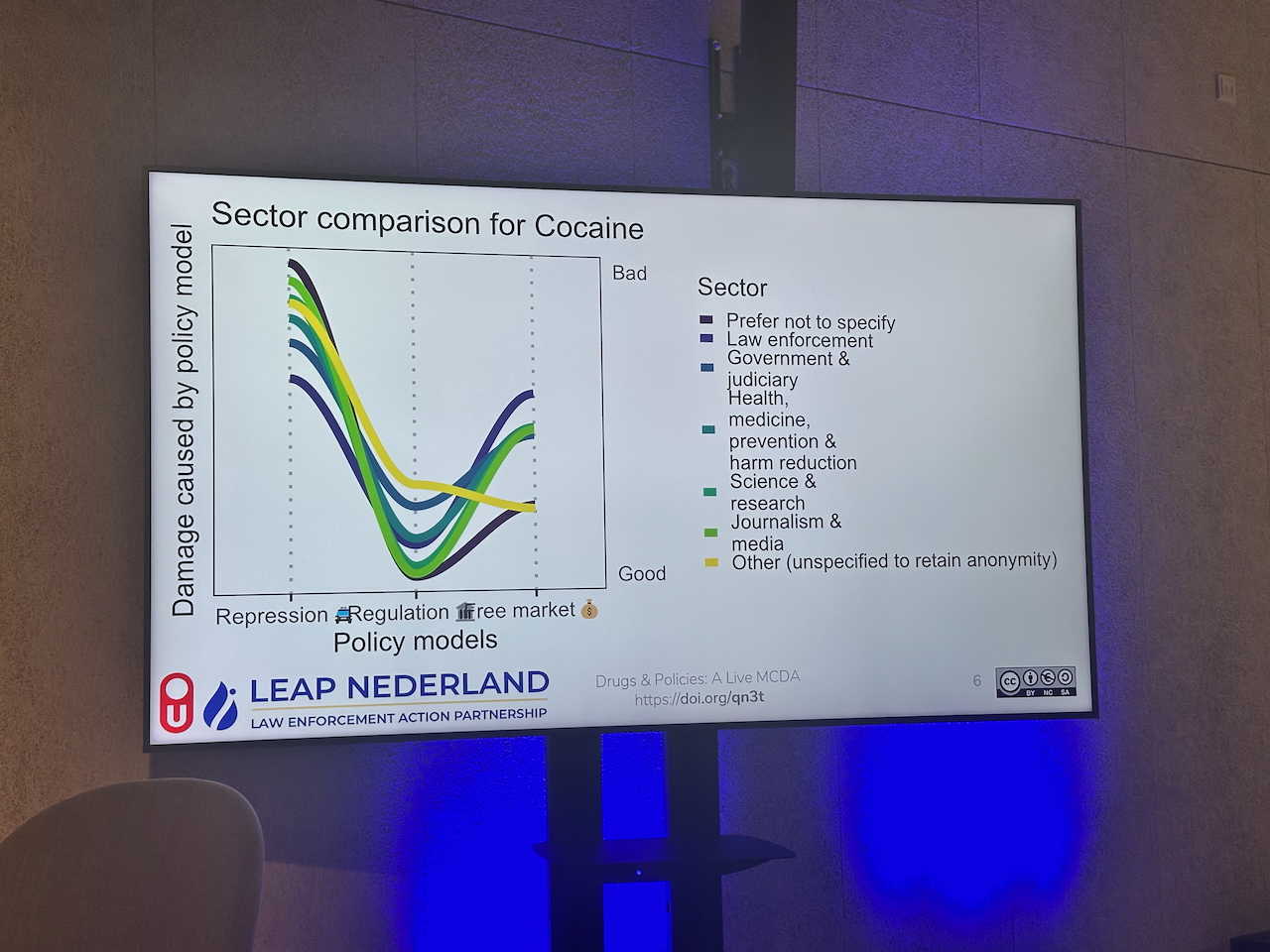
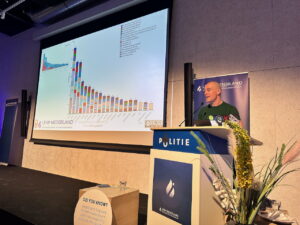
After the break, Gjalt-Jorn Peters and his assistant Timo van Ommeren held the packed room completely silent with an interactive MCDA exercise (Multi-Criteria Decision Analysis). They had developed a special application for this purpose. The audience, with diverse drug expertise, was asked to use their smartphones to estimate distribution models for alcohol, MDMA, cocaine, and cannabis along with expected societal consequences.
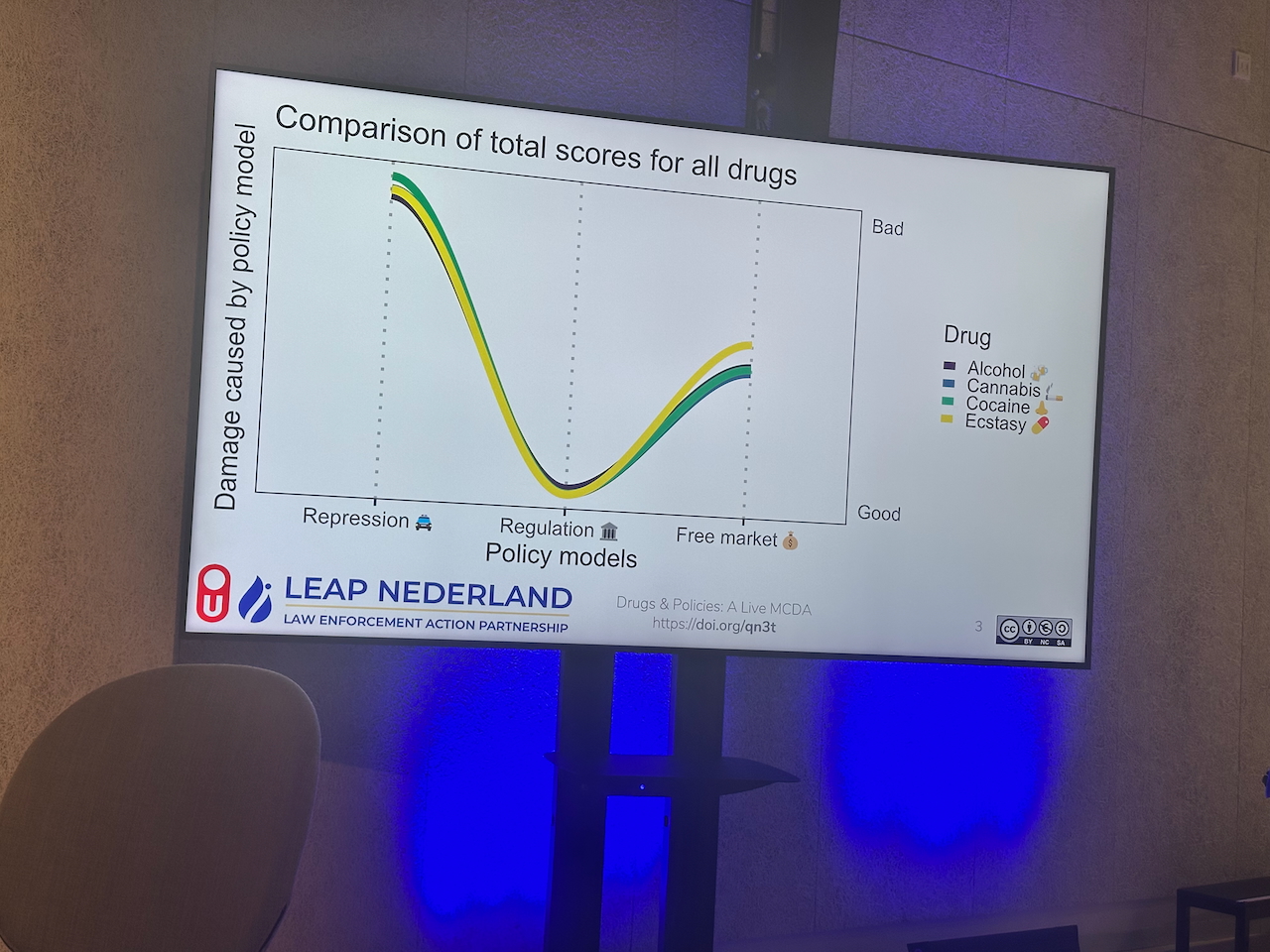
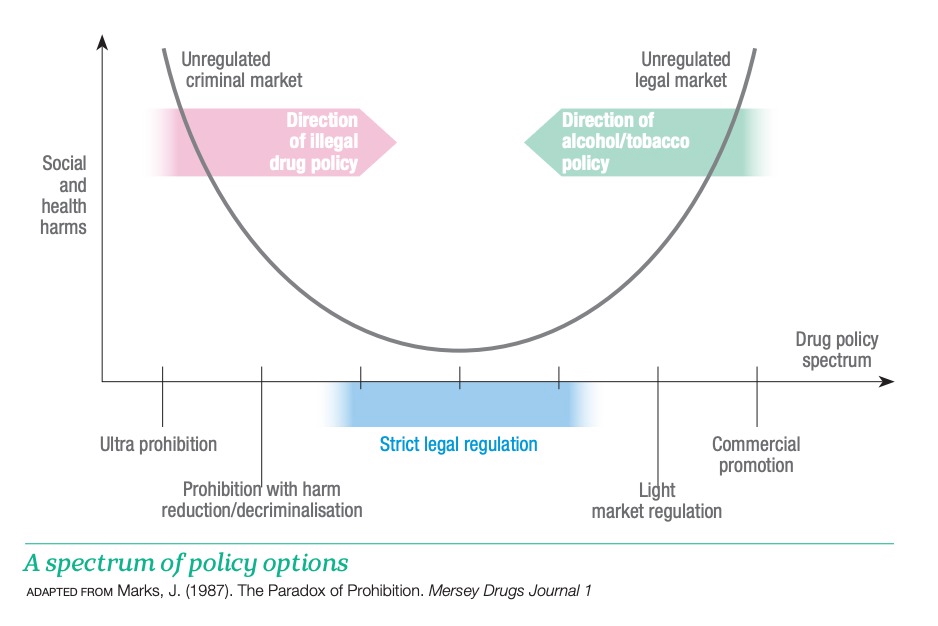
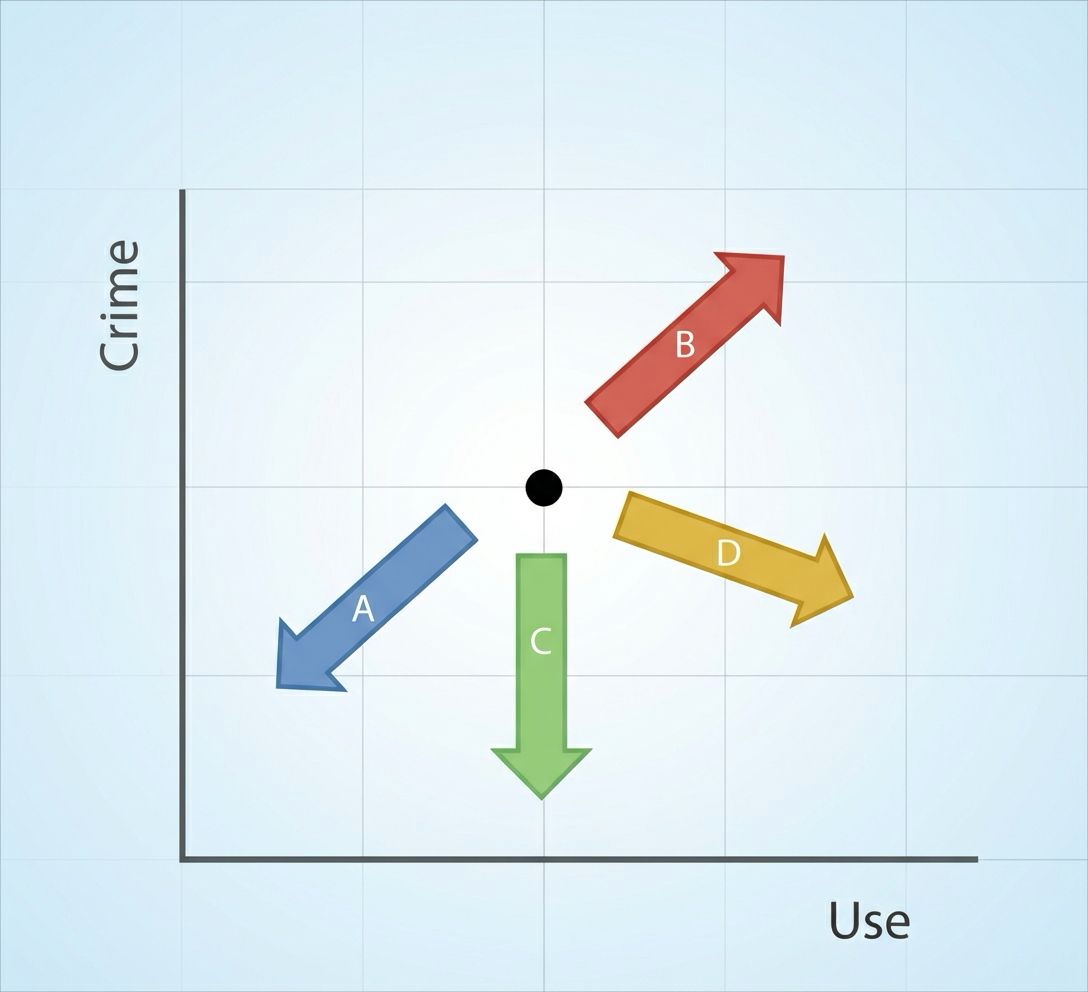
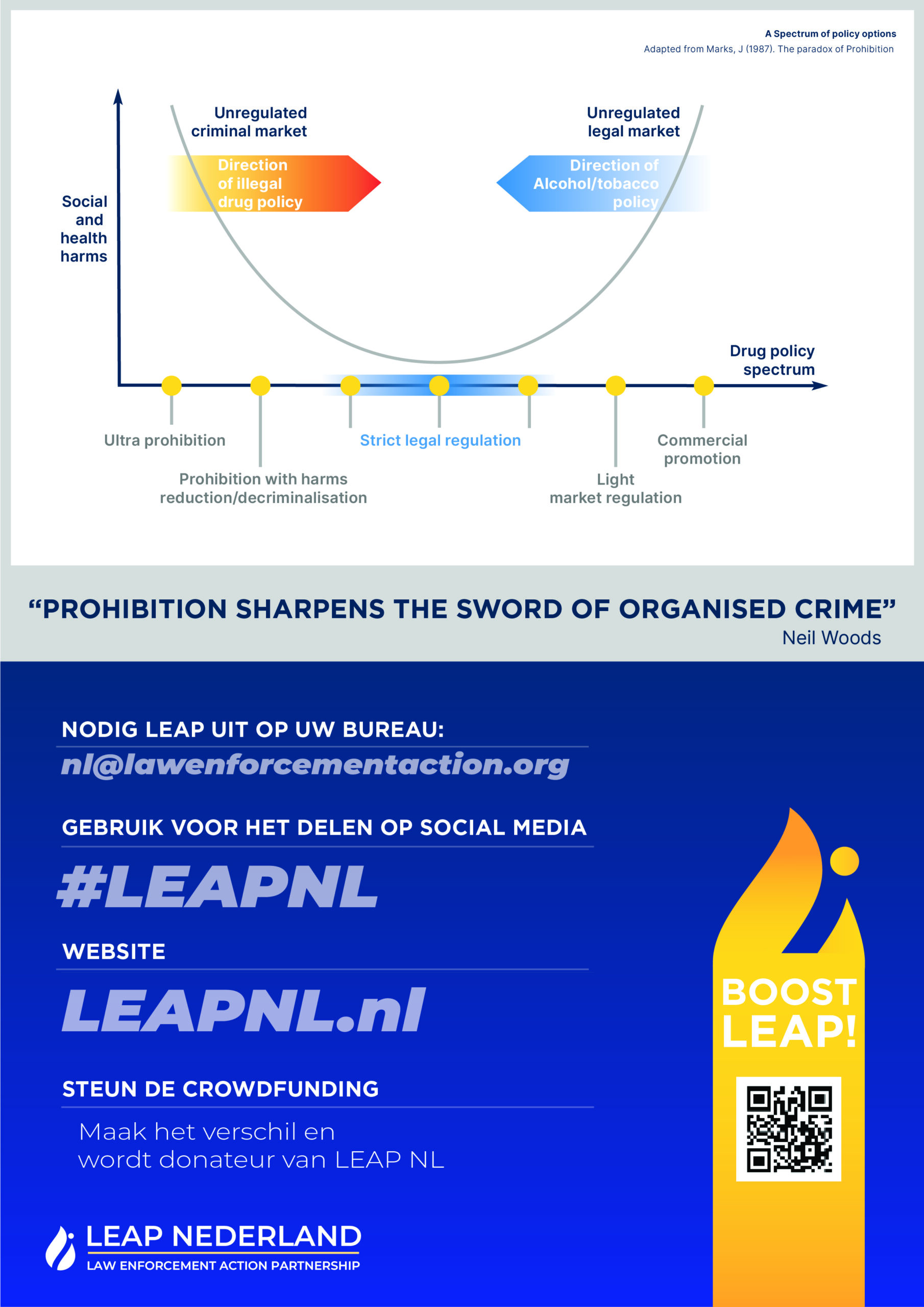
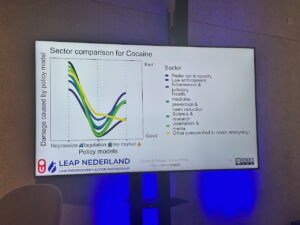
In real time, the prohibition-paradox curve emerged: repression causes more harm than free sale, but regulation results in by far the least harm. There were also interesting perception differences between professional groups, but the overall direction was unequivocal: regulation is the most harm-reducing option.
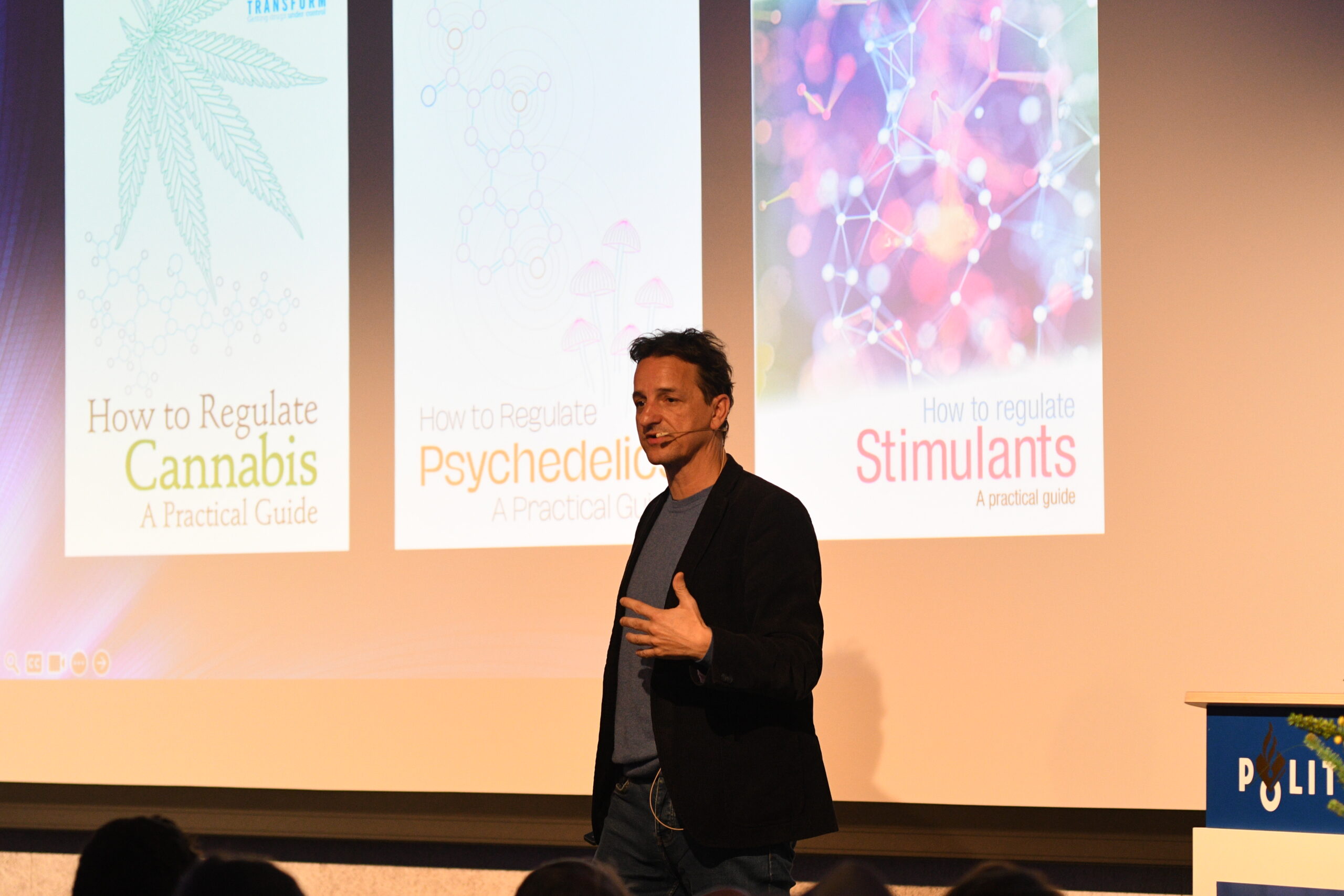
How to regulate…
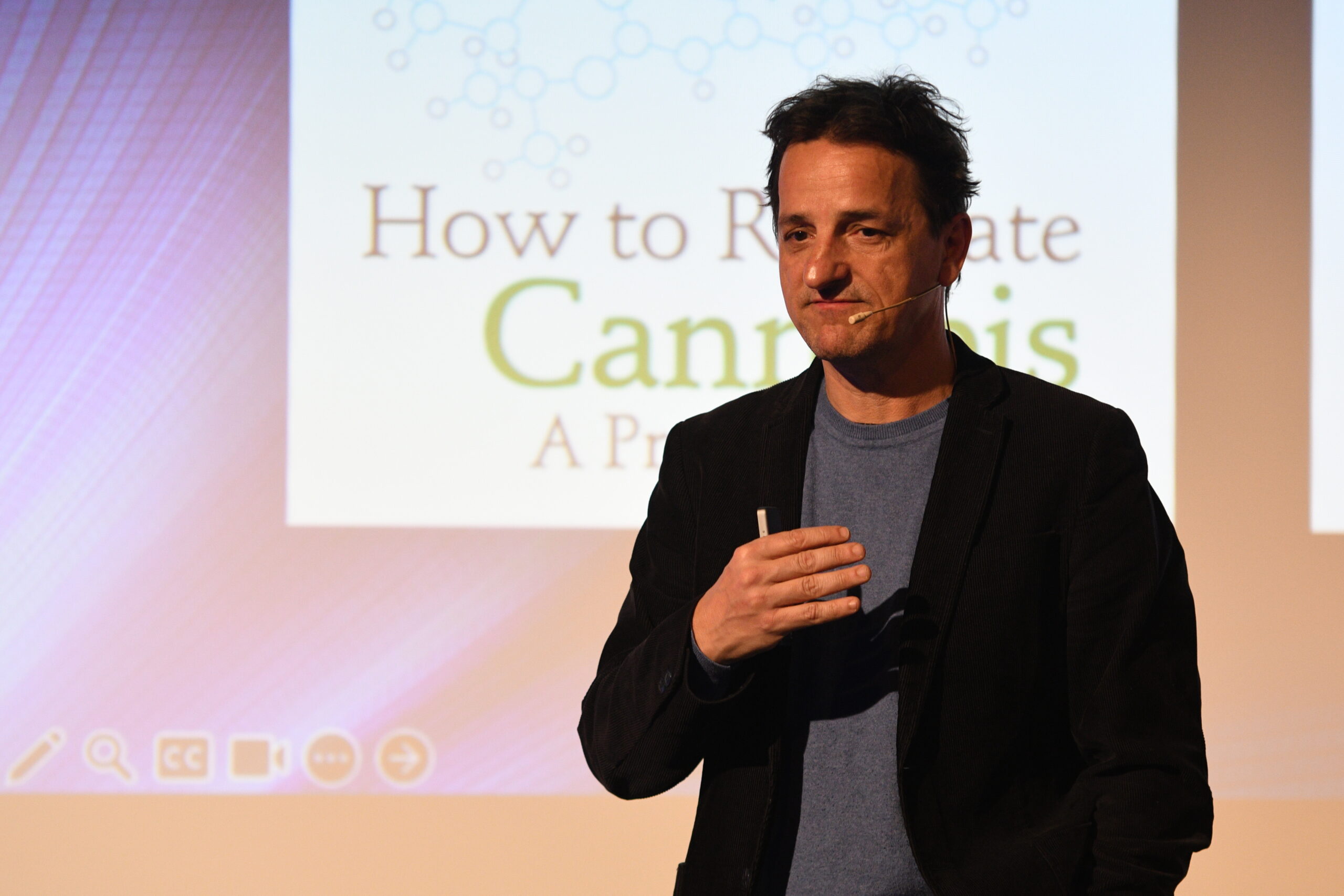
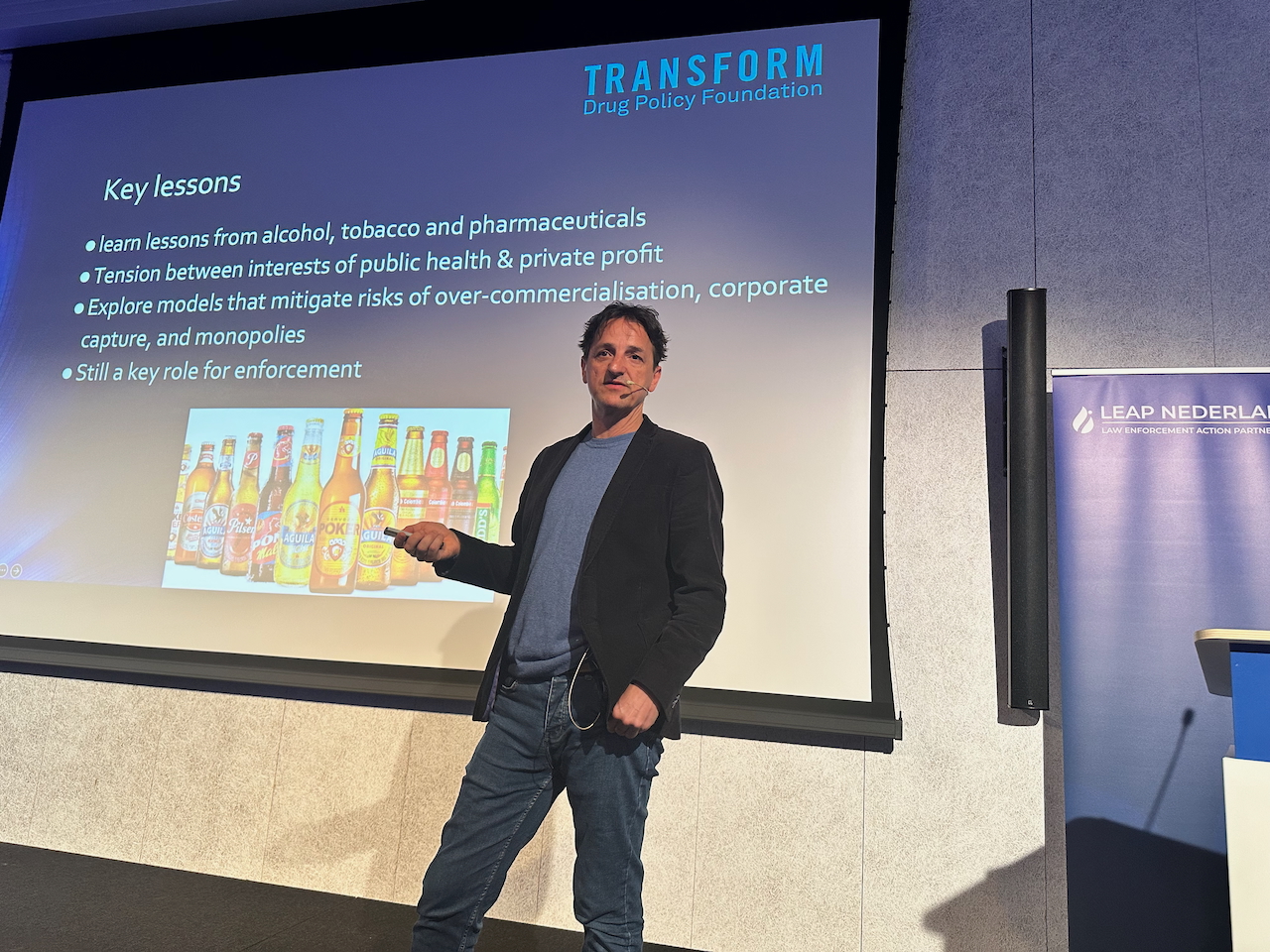
British drug policy analyst Steve Rolles supported these findings with examples from different countries and concrete proposals for packaging, dosing, and sales.

Rolles deftly sprinkled in strong one-liners:
“Prohibition is very bad at prevention.”
“Regulation is harm reduction.”
“Prohibition is the radical experiment.”
“The good thing with regulation is that you can begin from a clean slate.”
How Is Cannabis Regulation Going?
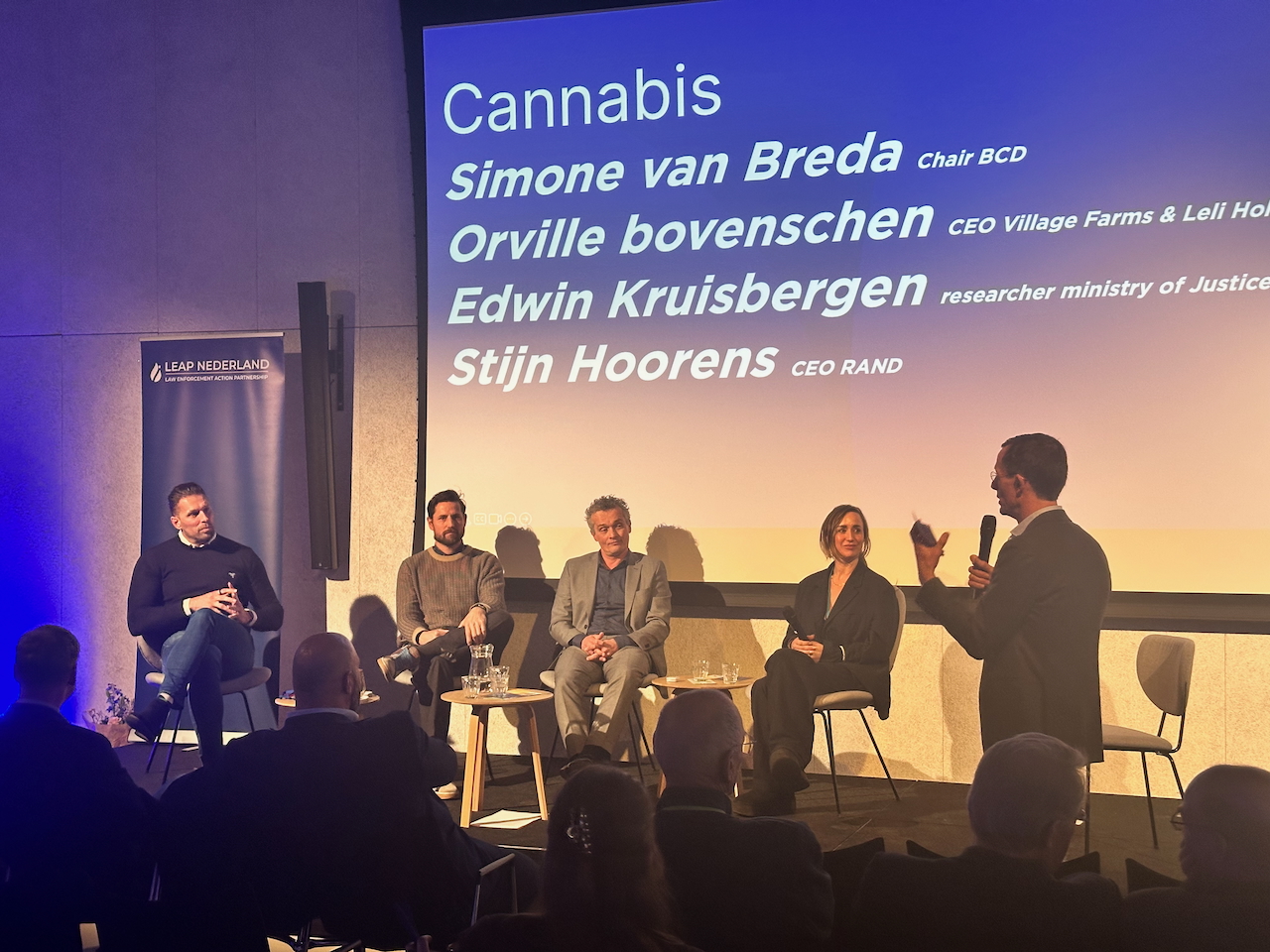
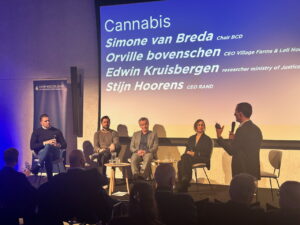
Because cannabis is currently in a transitional phase from illegal to regulated status in many jurisdictions, it received extra attention in a strong cannabis panel consisting of Orville Bovenschen, Simone van Breda, Stijn Hoorens, and Edwin Kruisbergen.
There is consensus that legal cannabis is cleaner and that crime decreases. Prevalence is slightly higher, but notably not among minors. There is also a substantial decrease in alcohol consumption that appears to be linked to cannabis use. It is still unclear whether the 20/80 distribution (20% of users consuming 80% of cannabis) is shifting. To move beyond the debate about whether increasing prevalence is problematic, it is important to monitor these figures closely and adjust policy where necessary.
The Dutch closed coffee shop chain experiment performs better on prevention than Canadian state-run stores. In Canada, the industry is hardly involved in prevention campaigns, although it does contribute significantly through taxes.
Critical Notes and Realism
Edwin Kruisbergen called regulation a risky social experiment and expressed fears, among other things, about irreversibility. These and other critical remarks sharpened the debate. At the same time, the panel acknowledged that full liberalization, as in Thailand, led to undesirable uncontrolled growth. Precisely for that reason, the more cautious Dutch experiment is seen as responsible.

Regulation only works if there is enforcement.
There is a fundamental difference between wanting to regulate something and actually being able to regulate it.
By spending a full day exploring alternative possibilities, the conference addressed the middle ground between supporters and opponents of regulation. The very fact that imagining alternatives caused friction demonstrates the importance of repeating this exercise more often. The conditions laid down by international law appeared to resonate with all participants. The conference offered no simple solutions, but something more important: nuanced facts, honest dilemmas, and an open conversation about what a more humane, effective, and realistic drug policy could look like.
Foto’s by Derrick Bergman and Has Cornelissen.